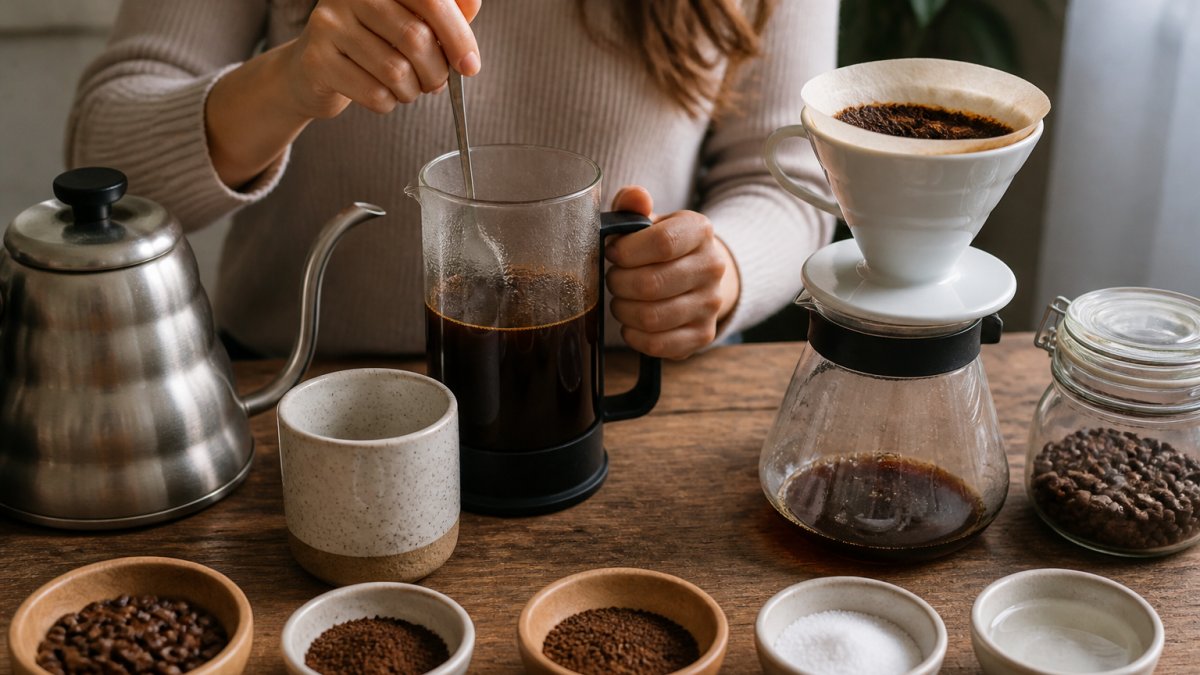
 how-to
Fix Bitter Coffee at Home: 7 Proven Methods
Table of Contents
- Why Your Coffee Tastes Bitter
- Over-Extracted vs Under-Extracted Coffee: Understanding the Difference
- Best Grind Size for Drip Coffee and Other Brew Methods
- Coffee Water Temperature Guide: The Right Heat for Your Brew
- Fix Bitter Coffee with These Proven Methods
- How to Fix Bitter Coffee: A Step-by-Step Diagnostic Guide
- Frequently Asked Questions
Last Updated: October 1, 2026
Why Your Coffee Tastes Bitter
Bitter coffee usually signals over-extraction, when water pulls too many dissolved solids from the grounds, extracting harsh compounds alongside good ones. Understanding over-extraction versus under-extraction is the first step toward fixing bitter coffee.
Over-Extracted vs Under-Extracted Coffee: Understanding the Difference
Over-extraction occurs when water stays too long with grounds, pulling out bitter compounds like chlorogenic acid and tannins, resulting in harsh, astringent taste. Under-extraction happens when water doesn't spend enough time with grounds, producing sour, thin coffee. The sweet spot captures natural sweetness and complexity without bitterness.
Best Grind Size for Drip Coffee and Other Brew Methods
Grind size controls extraction speed: finer grinds slow water passage and extend extraction; coarser grinds speed water through and shorten it. This makes grind size the most powerful lever for fixing bitter coffee without new equipment.
The right grind size depends on your brew method and the contact time that method naturally creates:
Brew Method | Grind Size | Contact Time | Why This Works |
|---|---|---|---|
Drip coffee maker | Medium (like sand) | 5-7 minutes | Water flows continuously; medium grind balances extraction without over-pulling bitter compounds |
French press | Coarse (like sea salt) | 4 minutes (immersion) | Long steep time with finer grinds causes over-extraction; coarse particles resist water penetration |
Pour over | Medium-fine (like table salt) | 2-4 minutes | Slower manual pour requires finer grind to extract enough flavor before water passes through |
Espresso | Fine (like flour) | 25-30 seconds | High pressure forces water through; fine grind creates resistance needed for proper extraction in short time |
AeroPress | Medium-fine | 1-2 minutes | Quick immersion-then-press needs finer grind to extract adequately in compressed timeframe |
Cold brew | Very coarse (like peppercorns) | 12-24 hours | Extended steep with cold water needs coarse grind to prevent over-extraction and muddy flavor |
If your coffee tastes bitter, your grind is likely too fine. Look for consistent particle size; a mix of powder and larger pieces causes uneven extraction. For drip coffee, grounds should feel like sand between your fingers. If unsure, start one grind size coarser, brew, and taste. Most people are surprised how much this single change improves their cup.
Invest in a burr grinder ($30-$60). Blade grinders produce inconsistent particle sizes, making extraction unpredictable. Burr grinders let you dial in precise adjustments, separating repeatable good coffee from hit-or-miss results.
- Drip coffee: Grind coarser; most over-extract due to fine grounds.
- French press: Grind much coarser; immersion time is long.
- Pour over: Grind slightly coarser or pour faster.
- Espresso: Grind finer; short contact time usually causes under-extraction.
- Cold brew: Use very coarse grind to prevent over-extraction during long steep.
Coffee Water Temperature Guide: The Right Heat for Your Brew
Water temperature controls extraction speed: hotter water extracts faster, cooler water extracts slower. But water chemistry matters equally and is often ignored.
The ideal range is 195-205°F for most brewing methods. Boiling water (212°F) over-extracts and tastes bitter. Let water cool 30-45 seconds after boiling. A basic thermometer costs a few dollars and removes guesswork.
Water hardness (mineral content) dramatically affects extraction. Hard water slows extraction, potentially causing thin, sour coffee. Soft water allows faster extraction, risking over-extraction and bitterness if grind size and brew time aren't adjusted.
If you live in an area with very hard water and your coffee consistently tastes sour or thin despite correct temperature and grind size, the mineral content is likely the culprit. Conversely, if you have soft water and struggle with bitterness, you may need to grind coarser or shorten brew time more aggressively than standard recommendations suggest.
How to know your water hardness:
You can test your water hardness using inexpensive test strips (available at hardware stores for $5-$10) or by contacting your local water utility, most provide free water quality reports. Water hardness is measured in parts per million (ppm) of dissolved minerals:
- Soft water: 0-60 ppm
- Moderately hard: 61-120 ppm
- Hard: 121-180 ppm
- Very hard: 180+ ppm
Specialty coffee organizations recommend 50-150 ppm for optimal extraction. If your water falls outside this range, filtering or adjusting your brewing parameters becomes important.
Practical fixes for water chemistry problems:
- If you have very hard water (180+ ppm): Use filtered water for brewing. A simple pitcher filter (like those from common brands) removes some minerals and improves extraction. Alternatively, grind slightly finer and extend brew time slightly to compensate for slower extraction.
- If you have very soft water (below 50 ppm): Your extraction happens faster, so you need to be more careful with grind size and brew time. Grind coarser than standard recommendations and reduce brew time by 15-30 seconds to avoid over-extraction and bitterness.
- If you have moderate hardness (60-150 ppm): You're in the ideal range. Standard brewing parameters should work well.
Temperature and water chemistry together:
Temperature and mineral content work together. Higher temperatures combined with soft water accelerates extraction dramatically, increasing bitterness risk. Lower temperatures combined with hard water slows extraction, increasing sourness risk. If you've adjusted grind size and brew time but still struggle with bitterness, check your water hardness before assuming your beans or equipment are the problem.
For the most control, use filtered water and a variable temperature kettle. This removes mineral variables and lets you dial in temperature precisely. It's not necessary for good coffee, but it eliminates one major source of inconsistency.
Fix Bitter Coffee with These Proven Methods
You have multiple levers to pull when fixing bitter coffee. Start with the easiest changes first, grind size and brewing time, before moving to other adjustments.
Adjust Your Brewing Time
Brewing time is the most direct control over extraction. Shorter brew times mean less contact between water and grounds.
How to adjust brewing time by method:
- Drip coffee: Reduce brew time by 15-30 seconds. Most drip makers brew for 5-7 minutes; try aiming for 4-5 minutes instead
- Pour over: Pour faster. Don't let water sit on the grounds longer than needed
- French press: Shorten the steep time from 4 minutes to 3 minutes, or even 2.5 minutes
- Espresso: Reduce the pull time by 2-3 seconds (e.g., from 28 seconds to 25 seconds)
Start with small changes. Reduce brewing time by 15 seconds, brew a cup, and taste it. If it's still bitter, reduce another 15 seconds. This methodical approach helps you find your sweet spot.
Add Salt to Neutralize Bitterness
Salt is a simple, effective hack that works by suppressing bitter perception on your taste buds. A tiny pinch, about 1/4 teaspoon per 6 oz cup, can dramatically reduce bitterness.
Add salt directly to your cup before pouring the coffee. Stir well so it dissolves completely. The salt won't make your coffee taste salty; it just softens the harsh edges.
This works best when combined with other fixes. Salt alone won't solve over-extraction, but it buys you time while you adjust your grind or brew method.
Dilute with Milk or Cream
Milk and cream coat your mouth and reduce bitterness perception. They also add body and smoothness to thin, over-extracted coffee.
The amount matters. A splash of milk (1-2 tablespoons) softens bitterness without masking the coffee's flavor. Adding too much turns it into a latte, which defeats the purpose if you wanted black coffee.
This is a quick fix when you're stuck with over-extracted coffee. It's not a permanent solution, you still need to fix your brewing, but it makes the cup drinkable while you troubleshoot.
Clean Your Brewing Equipment
Residue buildup inside your brewer causes bitter flavors. Old coffee oils and mineral deposits accumulate and interfere with extraction.
Clean your equipment regularly:
- Drip coffee maker: Run a cycle with white vinegar and water (1:1 ratio). Then run 2-3 cycles with plain water to rinse
- Pour over: Rinse with hot water between each brew. Soak in hot water for 10 minutes weekly
- French press: Empty grounds immediately after brewing. Soak the pot in hot water daily
- Espresso machine: Backflush the group head with a blind basket (no coffee) for 5-10 seconds. Run water through the portafilter
Scale buildup is especially common in areas with hard water.
Choose Higher-Quality Coffee Beans
The quality of your beans matters more than most people realize. Stale or low-quality beans taste bitter no matter how well you brew them.
How to Fix Bitter Coffee: A Step-by-Step Diagnostic Guide
Use this guide to pinpoint what's causing bitterness in your specific brew.
Frequently Asked Questions
What cancels out bitterness in coffee?
Several methods neutralize bitterness in your cup. A pinch of salt reduces bitter compounds by suppressing their perception on your taste buds. Adding milk or cream coats your palate and softens harsh flavors. Diluting your brew with hot water lowers the concentration of bitter compounds. For prevention, ensure your water temperature stays between 195–205°F during brewing, as hotter water over-extracts chlorogenic acid and tannins that create bitterness.
Does grind size affect coffee bitterness?
Yes—grind size directly controls how long water contacts coffee grounds. Finer grinds increase surface area, allowing water to extract more compounds faster, which often leads to over-extraction and bitterness. Coarser grinds slow extraction and reduce bitterness. For drip coffee, use a medium grind; for espresso, use fine; for French press, use coarse. If your coffee tastes bitter, try a coarser grind and shorten your brewing time.
How does water temperature impact coffee flavor?
Water temperature controls the rate and completeness of extraction. Water between 195–205°F extracts the right balance of flavors and acids. Water above 205°F over-extracts and pulls out excessive tannins and chlorogenic acid, creating harsh bitterness. Water below 195°F under-extracts and leaves coffee tasting sour and flat. Use a thermometer or electric kettle with temperature control to dial in the sweet spot for your brew method.
Why does the coffee I make at home taste bitter?
Bitterness usually comes from over-extraction, which happens when water stays in contact with grounds too long, when water is too hot, or when grind size is too fine. Other causes include old or stale beans that oxidize and develop harsh flavors, or scale buildup in your brewing equipment that interferes with water flow. Start by checking your grind size and brewing time, then verify your water temperature and when your beans were roasted. Premium, freshly roasted beans like those from The Gilded Cafe' Co. are roasted in small batches to preserve flavor and reduce oxidation.