 listicle
Best Organic Loose Leaf Tea Brands: 2026 Guide
Table of Contents
- What Makes the Best Organic Loose Leaf Tea Brands Stand Out
- Loose Leaf Tea vs Tea Bags: Why Quality Matters
- Top Organic Loose Leaf Tea Selections
- Ceremonial Matcha Green Tea: Premium Japanese Craftsmanship
- Earl Grey Black Tea: Timeless Elegance with Bergamot
- English Breakfast Black Tea: Balanced and Full-Bodied
- Jasmine Green Tea: Delicate Floral Notes
- Masala Chai Black Tea: Warming Spices and Bold Character
- Moroccan Mint Green Tea: Refreshing and Invigorating
- Hojicha Roasted Green Tea: Lower Caffeine, Smooth Comfort
- Mango Treat Black Tea: Tropical Sweetness
- Apple Cider Rooibos Tea: Naturally Caffeine-Free
- Hibiscus Berry Rooibos Tea: Vibrant and Fruity
- How to Brew Loose Leaf Tea for Maximum Flavor
- Best Tea Infusers for Loose Leaf Brewing
- Understanding USDA Organic Certification and Ethical Sourcing
- Health Benefits and Purity: What Sets Premium Brands Apart
- Storage and Freshness: Keeping Your Loose Leaf Tea at Peak Quality
- Frequently Asked Questions
Last Updated: September 19, 2026
What Makes the Best Organic Loose Leaf Tea Brands Stand Out
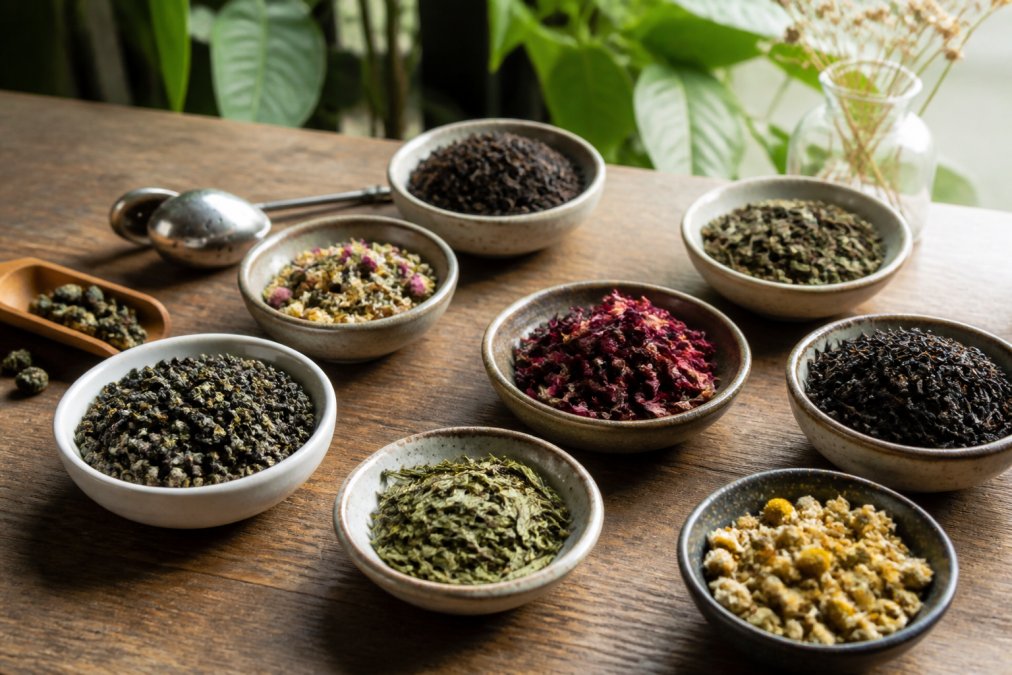
The best organic loose leaf tea brands prioritize whole leaf integrity, ethical sourcing, and transparent certifications. At The Gilded Cafe' Co., we offer a curated selection of premium loose-leaf teas.
Whole leaf teas retain essential oils and flavor compounds longer than broken leaves in bags. USDA organic certification ensures no synthetic pesticides or artificial additives. Fair trade practices guarantee equitable farmer compensation. Single-origin and estate-grown selections deliver terroir, the unique character from specific growing regions and harvest seasons.
Loose Leaf Tea vs Tea Bags: Why Quality Matters
Loose leaf tea delivers superior flavor and aroma because intact leaves unfurl fully during steeping, releasing tannins, polyphenols, and catechins more completely than broken leaf dust.
Broken leaves in bags oxidize faster and lose aromatics within weeks. Loose leaf teas stored properly maintain peak quality for months. Whole leaves expand to three times their dry size, requiring room to move; bags restrict this expansion and limit flavor extraction.
A single serving of premium loose leaf can yield multiple infusions, offering better flavor and steeping control.
| Aspect | Loose Leaf Tea | Tea Bags |
|---|---|---|
| Leaf Quality | Whole leaves, minimal dust | Broken leaves, fannings, dust |
| Flavor Intensity | Full, complex, multi-dimensional | Flat, muted, one-dimensional |
| Steeping Control | Precise water temp and time | Limited by bag design |
| Resteeping Potential | 3-5+ infusions per serving | 1-2 infusions maximum |
| Shelf Life | 6-12 months when stored properly | 2-4 months before staling |
| Cost Per Cup | Lower over time | Higher due to single use |
| Environmental Impact | Minimal packaging waste | Plastic and paper waste |
Top Organic Loose Leaf Tea Selections
The teas that follow represent the best of what organic loose leaf has to offer. Each delivers distinct flavor profiles and brewing characteristics.
Ceremonial Matcha Green Tea: Premium Japanese Craftsmanship
Our Ceremonial Matcha Green Tea is stone-milled from spring-harvest leaves in Shizuoka, Japan. At $22.99 for approximately 28 servings (roughly 82 cents per cup), it delivers buttery umami, natural sweetness, and creamy texture. Whisk 1 gram with 175°F water until frothy. Ceremonial grade uses only the youngest leaves and slower stone-milling, producing finer particles that dissolve completely without grittiness.

Earl Grey Black Tea: Timeless Elegance with Bergamot
Our Earl Grey Black Tea combines premium Ceylon black tea with bergamot oil and blue cornflower petals. Brew at 195°F for 5-10 minutes: shorter steeps (5 min) deliver bright citrus and floral notes; longer steeps (7-10 min) bring out malty backbone. The flavor is citrus-forward but never sharp, with malt depth preventing thinness.

English Breakfast Black Tea: Balanced and Full-Bodied
Our English Breakfast Black Tea is a carefully crafted blend of premium Organic Assam, Organic Ceylon, and Organic Second Flush Darjeeling teas that delivers a rich, full-bodied cup with remarkable balance. At $22.99 per pouch, brew at 195°F for 5-7 minutes. Drink with milk and sugar to mellow tannins, or plain if you prefer.
Jasmine Green Tea: Delicate Floral Notes
Our Jasmine Green Tea pairs leaves with jasmine blossoms at peak bloom for natural infusion. Brew at 175°F for 4-6 minutes. For additional infusions, slightly increase the steeping time while using the same tea leaves.
Masala Chai Black Tea: Warming Spices and Bold Character
Our Masala Chai Black Tea combines premium organic Assam with cinnamon, cardamom, ginger, cloves, black pepper, and star anise. Steep 2.5 grams at 195°F for 5-7 minutes, then add warm milk and sweetener.
Moroccan Mint Green Tea: Refreshing and Invigorating
Our Moroccan Mint Green Tea combines Chinese green tea with aromatic peppermint. Brew at 175-185°F for 2-3 minutes to preserve mint's fresh aroma and prevent grassy bitterness. Serve hot or iced.

Hojicha Roasted Green Tea: Lower Caffeine, Smooth Comfort
Our Hojicha Roasted Green Tea delivers toasted cereal notes, roasted nuts, and balanced umami with naturally lower caffeine (5-10 mg per serving). Brew 3 grams at 175°F, whisking until frothy. Works as a traditional whisked preparation or latte.
Mango Treat Black Tea: Tropical Sweetness
Our Mango Treat Black Tea combines black tea with naturally sweet mango flavor and calendula petals. Brew at 195°F for 5-10 minutes. Shines served iced.
Apple Cider Rooibos Tea: Naturally Caffeine-Free
Our Apple Cider Rooibos Tea combines South African rooibos with cinnamon, orange peel, and apple notes. Brew at 212°F for 4-6 minutes. Serve warm or chilled; add honey to amplify natural sweetness.
Hibiscus Berry Rooibos Tea: Vibrant and Fruity
Our Hibiscus Berry Rooibos Tea combines hibiscus flowers, rooibos, rosehips, orange peel, and berry flavors. Brew at 212°F for 5-10 minutes. A naturally sweet herbal infusion with juicy berry flavors, light citrus brightness, and a smooth rooibos finish. Refreshing served iced.
How to Brew Loose Leaf Tea for Maximum Flavor
Water temperature is critical: black teas need 195°F to extract full flavor without astringency; green teas need 175-185°F to prevent bitterness; herbal infusions need 212°F for full flavor extraction. Start with minimum steeping time and adjust upward.
Use 2.5 grams per 12 ounces of water. For stronger tea, increase leaf amount rather than steeping time. Water quality matters: filtered or spring water can produce better results.
Best Tea Infusers for Loose Leaf Brewing
Mesh ball infusers are a common option, while basket infusers offer more space. A fine-mesh strainer is another simple method: brew directly in your cup or pot, then strain as you drink.
Understanding USDA Organic Certification and Ethical Sourcing
USDA organic certification means tea was grown without synthetic pesticides, artificial fertilizers, or GMOs. The best organic loose leaf tea brands often prioritize fair trade practices.
Fair trade certification aims to ensure equitable farmer compensation.
Health Benefits and Purity: What Sets Premium Brands Apart
Loose leaf teas contain compounds like polyphenols, catechins, and antioxidants. Black teas contain theaflavins and thearubigins. Green teas are rich in catechins. Herbal infusions like rooibos contain unique compounds.
Storage and Freshness: Keeping Your Loose Leaf Tea at Peak Quality
Loose leaf tea is dried plant material that absorbs moisture, odors, and light. Proper storage preserves flavor, aroma, and the beneficial compounds that make premium tea worth buying.
Frequently Asked Questions
What makes organic loose leaf tea brands different from standard tea?
Organic loose leaf tea brands source whole leaves and flowers without synthetic pesticides, herbicides, or GMO processing. This preserves the tea's natural polyphenols, antioxidants, and flavor compounds. Whole leaves also release their full flavor profile during steeping, delivering richer taste and aroma than broken leaves in tea bags. Many premium brands pursue USDA organic certification and fair trade practices, ensuring both quality and ethical sourcing from recognized growing regions.
How do I know if loose leaf tea is truly pesticide-free?
Look for USDA organic certification on the packaging or product description. This certification verifies that the tea was grown without synthetic pesticides or fertilizers. Reputable brands also provide traceability information showing the tea's origin and processing methods. Some producers conduct third-party testing for heavy metals and microplastics. Estate-grown and single-origin teas typically offer better transparency about farming practices than blended products.
What are the health benefits of choosing organic loose leaf tea over tea bags?
Organic loose leaf tea contains whole leaves that retain more catechins, polyphenols, and antioxidants compared to dust and fannings found in tea bags. Loose leaf tea also allows multiple infusions from the same leaves. Herbal infusions like rooibos tisanes offer caffeine-free wellness options with their own antioxidant profiles.
How should I store loose leaf tea to maintain freshness?
Store loose leaf tea in airtight containers away from light, heat, and moisture. Glass jars with sealed lids or tin containers work best. Keep tea in a cool, dark cupboard, not near the stove or windows. Avoid storing near strong-smelling foods, as tea absorbs aromas easily. Most whole leaf teas stay fresh for 6-12 months when stored properly. Flavored teas like Earl Grey or Mango Treat may fade slightly faster due to essential oils. Check the aroma and color before brewing; fresh tea should smell vibrant and steep with rich color.
Why is loose leaf tea more expensive than tea bags?
Premium loose leaf tea costs more because it uses whole leaves and flowers rather than broken pieces, requires careful sourcing from specific estates, and often carries USDA organic and fair trade certifications. The production process, including hand-selection and stone-milling for powdered varieties, adds value. Ethical sourcing practices ensure farmers receive fair compensation. You also get better value per cup since loose leaf tea delivers multiple infusions and superior flavor, meaning each pouch lasts longer than equivalent tea bags while providing a richer brewing experience.