 ultimate-guide
Buy Small Batch Coffee Beans Online: A 2026 Guide
Table of Contents
- Why Small Batch Coffee Beans Taste Better
- How to Tell if Coffee Beans Are Fresh Before You Buy
- Choosing a Roast Profile and Processing Method
- What to Look for in an Online Roaster
- Coffee Bean Storage Tips to Keep Flavor Alive
- Coffee Subscription Benefits: Never Run Out of Fresh Beans
- Brewing Method Compatibility: Match Beans to Your Routine
- Start Your Small Batch Coffee Ritual
- Frequently Asked Questions
Last Updated: September 7, 2026
Why Small Batch Coffee Beans Taste Better
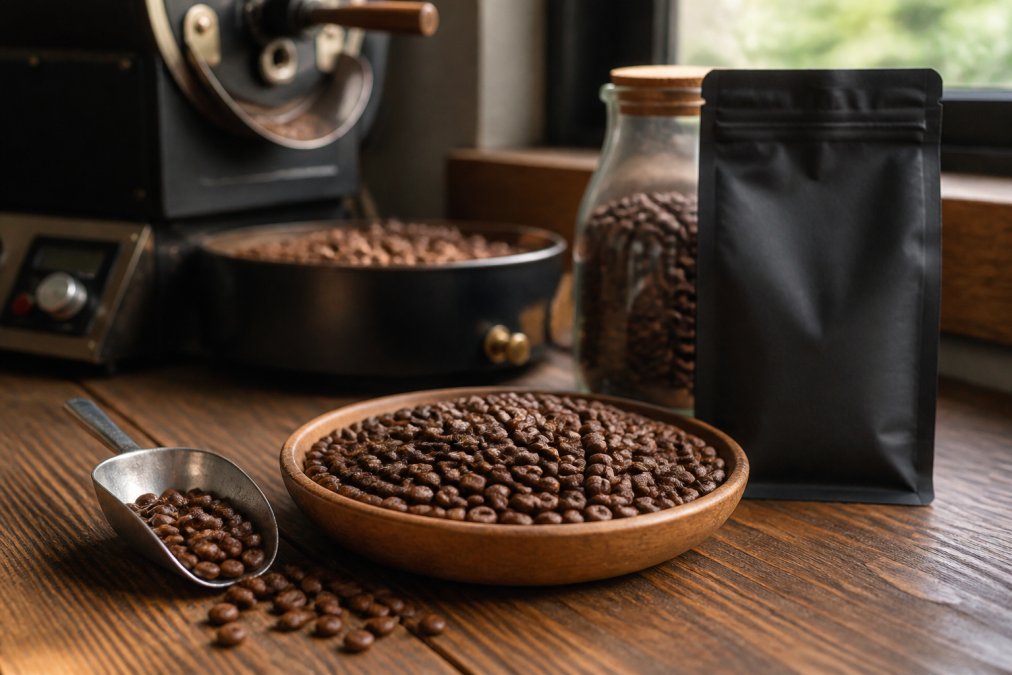
The decision to buy small batch coffee beans online often comes down to one factor: freshness. Small batch coffee is roasted in limited quantities, allowing precise roast control that translates into a more complex, vibrant cup.
At The Gilded Cafe' Co., we've built our entire approach around this philosophy. Roasting in small batches lets us adjust temperature and timing to highlight each origin's unique qualities, yielding coffee with distinct tasting notes and a sweetness mass-produced beans lose during long storage.
Roast-to-Order vs. Sitting on a Shelf
The biggest difference between specialty and commercial coffee comes down to timing. Roast-to-order means your beans are roasted after you order and shipped within days, unlike supermarket coffee that can sit on shelves for months.
Coffee begins losing its volatile aromatic compounds within hours of roasting. Buying small batch coffee beans online from a roaster that ships fresh delivers beans at their peak, typically within days of the roast date.
Small-Batch vs. Mass-Market: A Sensory Comparison
The sensory gap is dramatic when tasted side by side. Mass-market beans are roasted dark and fast for uniformity, masking defects and producing a one-dimensional, bitter profile. Small-batch roasting preserves origin character, letting you taste the region, altitude, and processing method.
| Comparison Point | Small-Batch Coffee | Mass-Market Coffee |
|---|---|---|
| Roast date | Clearly labeled, days ago | Often months old |
| Flavor profile | Complex, origin-specific | Flat, roasted, bitter |
| Bean quality | Specialty grade, hand-sorted | Commercial grade, mixed |
| Roast control | Precise, monitored per batch | Uniform, high-volume |
| Aroma | Rich, fragrant, alive | Dull, smoky, stale |
How to Tell if Coffee Beans Are Fresh Before You Buy
Fresh coffee beans should have a roast date on the bag, not just a "best by" date. This is the single most important quality indicator when buying small batch coffee beans online; reputable roasters always disclose it and ship within 24 to 48 hours.
Beyond the label, freshly roasted beans have a matte, slightly oily surface (for medium to dark roasts) and release a sweet, floral aroma. Stale beans look dry and dull, smell flat or musty, and produce a cup lacking sweetness and body.
The Science of Degassing: Why Fresh Beans Need to Rest
Roasting traps up to 2% of a bean's weight in carbon dioxide (CO2), a byproduct of the Maillard reaction at 400°F. Over the following days, the bean slowly releases this CO2 in a process called degassing.
CO2 matters for two reasons: it pushes oxygen away from the bean's surface, slowing oxidation, and it interferes with extraction. Brewing beans within the first 24 to 48 hours after roasting creates a gas barrier preventing full saturation, resulting in an under-extracted, sour, or flat cup.
Most specialty roasters agree the sweet spot for brewing is between day 4 and day 14 after roasting, when enough CO2 has released to brew cleanly but volatile aromatic compounds are still at peak concentration.
The Squeeze Test: A Practical Degassing Check
This works because one-way valve bags let CO2 escape without letting oxygen in. A puffy bag means active degassing; a flat one means the optimal flavor window is over.
Roast Date vs. Rest Period: A Practical Timeline
| Days After Roast | Bean State | Best Use |
|---|---|---|
| 0-2 | Heavy degassing | Not ideal for brewing; drink only if you must |
| 3-4 | Peak degassing slows | Good for espresso (some baristas prefer this) |
| 5-14 | Optimal flavor window | Best for pour-over, French press, drip |
| 15-21 | Flavor fading | Acceptable for milk-based drinks |
| 22+ | Stale | Use for cold brew or discard |
This timeline is why buying from a roaster that ships within 24 to 48 hours of roasting is critical. If you order beans roasted three weeks ago and shipped ground, you have lost most of the volatile compounds that make small-batch coffee distinctive. Always check the roast date at checkout, if the roaster does not display one, that is the clearest red flag.
Choosing a Roast Profile and Processing Method
Your brewing style and taste preferences should guide roast selection. Light roasts preserve origin flavors with bright acidity and floral or fruity notes; medium roasts balance acidity with body and sweetness; dark roasts deliver bold, chocolatey, and smoky profiles with lower acidity, ideal for espresso and milk-based drinks.
Processing method also shapes flavor. Washed process coffees are clean and bright; natural process coffees are fruit-forward and heavy-bodied with wine-like complexity; honey process offers sweetness with moderate acidity. These details are usually listed on the product page.
For newcomers, a sample pack is the smartest way to discover your preferences. The Gilded Cafe' Co. offers a Best Sellers Sample Pack with six 2oz portions of different roasts for $24.99, letting you compare profiles without committing to a full bag. Our Single Origin Favorites Sample Pack serves the same purpose for those curious about regional differences, featuring beans from Brazil, Peru, Mexico, and Bali with detailed grower and altitude information.


What to Look for in an Online Roaster
Transparency separates genuine specialty roasters from those using marketing buzzwords. Look for roasters that disclose roast date, origin, altitude, and processing method. Ethical sourcing claims should be backed by specifics, such as direct trade relationships or certifications.
Shipping speed and packaging matter equally. Beans should arrive within days of roasting in one-way valve bags. If a roaster cannot tell you when your coffee was roasted, that is a red flag. The Gilded Cafe' Co. roasts every order in small batches and ships directly to your door.
Coffee Bean Storage Tips to Keep Flavor Alive
Proper storage preserves flavor. Oxygen, light, heat, and moisture are the four enemies of fresh coffee. Store beans in an airtight, opaque container at room temperature, away from sunlight and your stove. Never refrigerate or freeze beans you use daily, as moisture and temperature fluctuations accelerate staleness.
Buy whole beans and grind only what you need immediately before brewing, as ground coffee loses its volatile compounds rapidly. Most roasters recommend consuming beans within two to four weeks of the roast date. Following these coffee bean storage tips will keep your small batch coffee tasting vibrant as long as possible.
Coffee Subscription Benefits: Never Run Out of Fresh Beans
A coffee subscription solves the most common problem with premium beans: running out and being tempted by stale supermarket options. You receive freshly roasted beans on a schedule matching your consumption, ensuring every cup comes from a recent roast date. Benefits extend beyond convenience to consistent quality and often a small price break.
Most roasters offer flexible shipping frequency, from every one to four weeks. A typical 12oz bag yields about 15 to 18 cups, so a daily drinker needs a bag roughly every two weeks. Subscriptions also make excellent gifts.
Brewing Method Compatibility: Match Beans to Your Routine
The way you brew should influence which beans you choose. Espresso thrives with medium to dark roasts for thick crema and balanced extraction; pour-over and drip highlight the bright, floral qualities of light roasts; French press and cold brew benefit from fuller-bodied beans that stand up to longer extraction times.
But this is only half the equation. The other half is understanding how each method extracts different compounds, and why certain origins and roast levels shine in specific gear.
Extraction Mechanics by Brewing Method
Coffee extraction is a race between desirable flavors (fruity acids, caramelized sugars) and undesirable ones (bitter, astringent compounds). Different brewers extract at different rates, which is why bean choice matters.
Pour-over (V60, Chemex, Kalita Wave): These methods use a thin bed of coffee and a paper filter, producing a clean, bright cup. They excel at highlighting the delicate acidity of light-roasted, washed-process beans from high-altitude regions like Ethiopia or Kenya. The rapid, even flow means you want dense, soluble beans, typically light to medium roasts. Dark roasts often taste hollow or ashy in a V60 because the brewer cannot extract enough sweetness to balance the roast bitterness.
French Press: The metal mesh filter lets fine particles and natural oils through, creating a fuller body. This method is forgiving with medium to dark roasts and pairs well with natural-processed beans from Brazil or Sumatra, which have heavy body and low acidity. The longer steep time (4 minutes) extracts more compounds, so a light roast can become overly acidic, while a dark roast develops a rich, chocolatey depth.
AeroPress: This brewer is the most versatile because you control pressure, steep time, and dilution. It works well with a wide range of roasts but particularly shines with medium roasts that have balanced acidity and sweetness. Many home brewers find that a medium-roast blend from Central America, like our 6 Bean Blend, performs beautifully, producing a clean cup with a syrupy body.
Espresso: Espresso extraction is short (25-30 seconds) and high-pressure, pulling out both the brightest acids and the deepest bitters. Medium to dark roasts with developed sugar content are the standard choice for a thick crema and a sweet, not sharp, shot. Light roasts can taste aggressively sour unless your grinder and machine are dialed in precisely.
Cold Brew: Cold water extracts slowly and selectively, pulling out sweet and chocolatey notes while leaving behind bitter compounds. This makes cold brew the most forgiving method, even a medium-dark roast slightly past its peak can produce a smooth, enjoyable concentrate.
Grind Size: The Critical Link
Grind size is the critical link between your beans and your brewer. A coarse grind suits French press, while espresso demands a fine, consistent grind. When you buy small batch coffee beans online, consider whether the roaster provides grind options at checkout. For best results, invest in a quality burr grinder and grind whole beans yourself.
Here is a practical reference for grind size by method:
| Brewing Method | Grind Size | Typical Ratio (Coffee:Water) | Ideal Roast Level |
|---|---|---|---|
| Espresso | Fine (like table salt) | 1:2 | Medium to dark |
| Pour-over (V60) | Medium-fine (like sand) | 1:16 | Light to medium |
| AeroPress | Medium-fine to fine | 1:15 | Light to medium |
| Drip machine | Medium (like kosher salt) | 1:16 | Medium |
| French press | Coarse (like breadcrumbs) | 1:15 | Medium to dark |
| Cold brew | Extra-coarse (like peppercorns) | 1:8 | Medium to dark |
Why Origin Matters as Much as Roast
Roast level is only half the story. The bean's origin determines its density and solubility. High-altitude beans from Ethiopia or Colombia are denser and extract more slowly, making them ideal for pour-over where you want clarity. Lower-altitude beans from Brazil or Sumatra are softer and extract quickly, making them forgiving in French press or espresso where you want body.
A practical approach: for pour-over, look for a light roast with a washed process from East Africa; for French press or espresso, look for a medium to dark roast with a natural or honey process from South America or Indonesia. This pairing logic separates a good cup from a great one, and it is why buying from a roaster that lists origin, altitude, and processing method on every product page is essential.
Start Your Small Batch Coffee Ritual
The journey to better coffee starts with a single decision to prioritize freshness. When you buy small batch coffee beans online, you are choosing beans roasted with intention, sourced with transparency, and shipped at their peak. The difference is not subtle; it is the difference between drinking a beverage and experiencing a craft.
Whether you are just beginning to explore specialty coffee or you are a seasoned home brewer, sampling different origins and roast profiles is the fastest way to refine your palate. A flavored coffee sampler or a best sellers pack offers an affordable, low-commitment entry point into a world of richer flavor.

Frequently Asked Questions
What are the benefits of buying small batch coffee beans?
Small batch coffee beans are roasted in limited quantities, often to order. This means the beans you receive are at their peak freshness, usually within days of the roast date. The roaster can also control the roast profile more precisely, highlighting unique tasting notes from single-origin farms. Compared to mass-produced beans that may sit in warehouses for months, small batch coffee delivers a brighter, more complex, and aromatic cup that reflects the bean's true character.
How can you tell if coffee beans are truly fresh?
The most reliable indicator is the roast date. Look for beans roasted within the past two to four weeks. Fresh beans will also have a visible sheen of oil (for darker roasts) and release a strong, sweet aroma when the bag is opened. If the bag has a one-way valve, press it and inhale; a lack of smell indicates the beans have gone stale. Whole beans should feel dense, not lightweight.
What is the best way to store small batch coffee beans to maintain flavor?
Store your beans in an airtight, opaque container at room temperature. Keep them away from heat, light, and moisture, which accelerate staling. Avoid the refrigerator or freezer, as condensation can damage the beans. For best flavor, buy whole beans and grind only what you need right before brewing. If you have a large order, portion it into smaller sealed jars and open one at a time to limit air exposure.
What is the difference between small batch and mass-produced coffee?
Mass-produced coffee is roasted in enormous quantities to ensure a uniform, consistent product that can sit on a shelf for a long time. This process often prioritizes shelf stability over flavor, resulting in a flat or bitter taste. Small batch roasting allows the roaster to monitor the beans closely, adjusting heat and time to develop the specific flavor profile of that harvest. This craft approach yields a fresher, more distinctive cup.
What should you look for when choosing an online coffee roaster?
Seek a roaster that displays the roast date clearly and roasts to order. Look for transparency about their sourcing, such as naming the farm, region, or cooperative, and any certifications like Fair Trade or Organic. Check if they offer whole bean options and provide tasting notes or brew recommendations. A roaster that explains the processing method and altitude of their beans shows a commitment to quality and craft.
Finding coffee you genuinely love takes a bit of experimentation, and that is part of the pleasure. At The Gilded Cafe' Co., we roast every batch in small quantities to capture the full character of beans from renowned growing regions, and we deliver them fresh to your door. Explore our curated selection of whole bean coffees and discover a daily ritual worth savoring. Shop our coffee collection and taste the difference freshness makes.