 how-to
Freshly Roasted Coffee Delivery Timeline Explained (2026)
Table of Contents
- What 'Freshly Roasted' Really Means for Your Delivery
- The Coffee Degassing Process: Why Your Beans Need Time After Roasting
- How Shipping Transit Time Affects Your Coffee's Flavor Profile
- Finding the Peak Flavor Window for Coffee After Delivery
- How to Store Coffee Beans for Freshness After They Arrive
- Building a Delivery and Consumption Timeline That Works
- Frequently Asked Questions
Last Updated: September 15, 2026
What 'Freshly Roasted' Really Means for Your Delivery
"Freshly roasted" means coffee roasted days, not months, before it reached your door, a distinction that matters because your coffee delivery timeline starts changing the moment it leaves the roaster. This guide from The Gilded Cafe' Co. breaks down the freshly roasted coffee delivery timeline so you know exactly when your beans taste best.
Most grocery bags carry a "best by" date; specialty roasters print a roast date instead. That single change tells you how old the coffee actually is, check it before anything else.
The freshness window is real but generous. Small-batch roasters often roast to order, ship within a day or two, and let beans rest in transit, so your coffee arrives closer to peak flavor than beans pulled off a local shelf.
The Coffee Degassing Process: Why Your Beans Need Time After Roasting
The coffee degassing process is the release of carbon dioxide trapped inside beans during roasting. Roasting fractures the dense green bean's cell walls, drives off moisture, and creates thousands of pressurized CO2 pockets. That gas keeps escaping for days and directly interferes with how water extracts flavor.
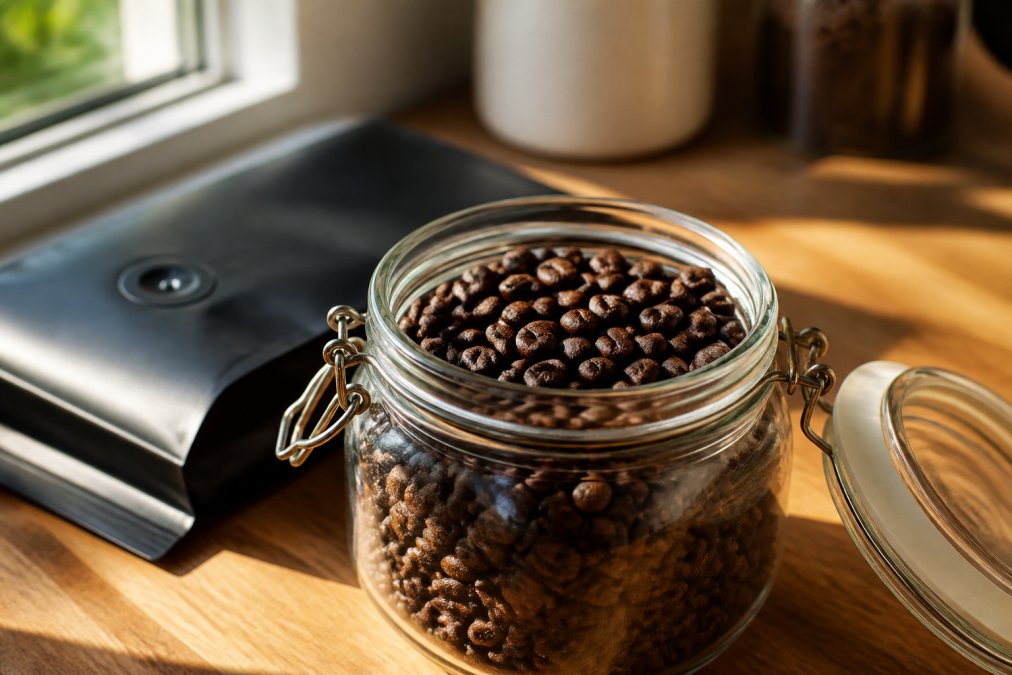
Brew too soon and escaping CO2 pushes water away from the grounds, causing channeling, uneven extraction, sour notes, thin body, and a muddled aftertaste. Wait too long and oxygen flattens aroma and acidity. The goal is the bean that has finished venting but has not yet started oxidizing.
A common mistake is assuming fresher always means better. Coffee needs a short resting period after roasting before it hits its stride, and that period varies by roast.
How Roast Level Changes the Release of Carbon Dioxide
Roast level is the biggest variable in degassing speed, because darker roasting physically opens the bean up. Past first crack and toward second, cellulose breaks down, oils migrate to the surface, and the internal pore network becomes more connected, so CO2 escapes faster.
The practical pattern most roasters work from looks like this:
- Light roasts: Dense, intact cell structure, slow CO2 release. These often need 7 to 14 days of rest before they hit their sweet spot, and some very light Nordic-style roasts keep improving for three weeks.
- Medium roasts: The middle ground. Most settle in 4 to 7 days and hold a wide peak window from about day 5 through day 14.
- Dark roasts: Porous and oily, they vent quickly. A dark roast may be ready to brew 2 to 4 days after roasting, but it also oxidizes faster, so its peak window is narrower, often just day 3 through day 10.
- Espresso roasts: Because espresso forces water through at high pressure, residual CO2 causes more visible problems (gushing, uneven shots). Many espresso blends are rested 5 to 10 days before dialing in, even when the same beans would be fine in a pour-over sooner.
Bean density and moisture also matter: a high-grown, dense hard bean holds CO2 longer than a lower-grown bean roasted to the same level. That is why two coffees roasted the same day at the same level can peak a week apart.
Why the Bag Puffs Up (and Why That Is a Good Sign)
A sealed bag with a one-way valve that arrives slightly inflated is CO2 doing exactly what it should, the valve lets gas out without letting oxygen in. A rock-hard, ballooned bag was likely roasted very recently and still needs rest. A flat bag is not automatically stale, but it is a cue to check the roast date.
Resting Recommendations by Brew Method
Rest time also depends on how you brew: gentle, slow methods are more forgiving of residual CO2 than fast ones.
- Pour-over and drip: Fairly tolerant. A 4- to 7-day rest is usually enough for medium roasts.
- French press and immersion: Tolerant of CO2 because the grounds stay submerged. A 3- to 5-day rest often works.
- Espresso: Least tolerant. Residual CO2 shows up as gushing, blonding, and inconsistent shots. Rest 5 to 10 days for most roasts, longer for light.
- Cold brew: Very forgiving. The long, cold extraction has time to work around residual gas, so even 2-day-old coffee can perform well.
"Fresh" is not one number but a range that shifts with roast level, bean density, and brew method, anchored to the roast date on the bag.
How Shipping Transit Time Affects Your Coffee's Flavor Profile
Shipping transit time is not dead time. For most roast-to-order coffees, transit doubles as the resting period, which is why beans often arrive near their peak.
A roaster shipping within 24 to 48 hours of roasting gives the coffee a head start: by the time the package reaches your kitchen, several days of degassing have passed. What looks like a logistics delay is quietly improving your cup.
The catch is variability, weather, weekends, and carrier volume can stretch a two-day shipment into five. That is why the roast date matters more than the shipping estimate.
Finding the Peak Flavor Window for Coffee After Delivery
The peak flavor window for coffee is the stretch when degassing has slowed but oxidation has not yet taken hold. For most whole bean coffee it runs roughly 4 to 14 days after the roast date, moving with roast level, bean density, and storage.
Within that range, flavor notes, acidity, and body are most balanced; before it the coffee tastes sharp, and after it aroma degrades and the cup turns dull. The label only gives the roast date, not whether this bag, in your kitchen, has hit its stride. That is where sensory cues come in.
Visual and Sensory Cues That Tell You Coffee Is at Its Best
You do not need a lab to read freshness, a few cues work together better than any single one:
- The bloom: Pour hot water over fresh grounds.
A Simple Freshness Log You Can Keep
What Changes the Window
How to Store Coffee Beans for Freshness After They Arrive
Whole Bean vs. Ground: Matching Storage to Shelf Life
| Format | Typical Shelf Life | Best Storage | Best For |
|---|---|---|---|
| Whole bean | 2-4 weeks at peak | Airtight, room temp | Daily brewing, espresso |
| Ground coffee | 3-7 days at peak | Airtight, cool, dark | Drip, quick convenience |
| Single-serve capsules | Several months sealed | Original packaging | Speed, travel, office |
Building a Delivery and Consumption Timeline That Works
Frequently Asked Questions
How long should I wait after the roast date to brew my coffee?
Most coffees hit their best flavor between 4 and 14 days after the roast date. During the first few days, the coffee degassing process releases carbon dioxide, which can make the bloom overly aggressive and the cup taste flat. Waiting 3 to 5 days after roasting lets the beans settle. Lighter roasts often peak later, around days 7 to 14, while darker roasts are usually ready sooner, around days 3 to 7.
Does shipping time affect the quality of freshly roasted coffee?
Shipping transit time is actually part of the resting period. When beans are roasted to order and shipped within 24 to 48 hours, the 2 to 5 days they spend in transit often lands them right in their peak flavor window on arrival. A one-way valve on the bag lets carbon dioxide escape without letting oxygen in, so the coffee keeps degassing safely while it travels to your door.
What is the difference between a roast date and a best-by date?
A roast date tells you exactly when the beans were roasted, which is the number that matters for freshness. A best-by date is often set months out and says little about actual quality. For the peak flavor window for coffee, look for a printed roast date within the last 2 to 4 weeks, and treat the best-by date as a secondary reference at best.
How should I store coffee beans for freshness once they arrive?
Keep beans in an airtight container away from light, heat, and moisture. A ceramic or opaque canister stored in a cool cupboard works well. Avoid the refrigerator, where condensation and odors can ruin the flavor profile. If you buy more than a two-week supply, freeze a portion in a vacuum sealed bag and thaw it fully before grinding. Always buy whole bean when you can and grind right before brewing.
Timing your coffee around its roast date is the difference between a good cup and a forgettable one. The Gilded Cafe' Co. roasts in small batches and ships direct to your door, so your beans arrive close to peak flavor. With small-batch roasting, beans sourced from renowned growing regions, and convenient direct-to-door delivery, we make it easy to keep your ritual fresh. Get started with The Gilded Cafe' Co. and taste what properly timed coffee delivers.