 how-to
Direct-to-Door Delivery for Subscription Box Services
Table of Contents
- How Subscription Box Delivery Actually Works
- Coffee Subscription Delivery: What Arrives and When
- Coffee Beans Delivered Monthly: Timing, Tracking, and Failed Deliveries
- Fresh Roasted Coffee Subscription: Why Roast-to-Delivery Time Matters
- How to Choose a Coffee Subscription That Fits Your Routine
- The Real Cost of Subscription Box Delivery
- In-House Fulfillment vs. 3PL for Subscription Boxes
- Measuring Delivery Performance and Customer Experience
- Conclusion
- Frequently Asked Questions
Last Updated: October 18, 2026
How Subscription Box Delivery Actually Works
Direct-to-door delivery for subscription box services starts with a simple promise: a box leaves a fulfillment center and arrives on a predictable schedule. At The Gilded Cafe' Co., we build our small-batch coffee boxes around that promise.
The delivery chain has four links: order processing, box assembly, carrier handoff, and doorstep delivery. Each adds time and cost, and each can break.
From Order to Doorstep: The Delivery Chain
Here is the sequence a box follows, step by step:
- Order processing. The system confirms payment and pulls the order into a queue.
- Pick and pack. Staff pull products from inventory and pack them into the box.
- Box assembly. Inserts, samples, and protective packaging go in last.
- Labeling and carrier handoff. The carrier scans the parcel and takes custody.
- Home delivery. The carrier delivers to the doorstep or a pickup point.
A common mistake is treating these steps as separate. Slow order processing delays packing, and late packing misses the carrier cutoff, pushing the whole delivery date back.
Coffee Subscription Delivery: What Arrives and When
Coffee subscription delivery is a recurring shipment of freshly roasted beans on a fixed schedule, usually monthly. Most boxes arrive within a few days of roasting, and contents vary by plan.
A curated coffee box typically holds one or more of the following:
- Whole-bean or ground coffee in sealed bags
- Single-origin or blended roasts
- Sample sizes for tasting across regions
Inside a Curated Box
Our sample packs show what a curated box looks like. The Best Sellers Sample Pack ($24.99) holds six 2oz packs, from a dark 6Bean Blend to single origins from Peru, Mexico, and Bali. The Single Origin Favorites Sample Pack ($24.99) covers Brazil, Colombia, Costa Rica, Ethiopia, Honduras, and Tanzania.


For a simpler routine, single-serve capsules work well. The 12 Pack Single Serve Coffee Capsules ($19.99) and the 60 Pack ($59.99) both use a sealed capsule design that keeps oxygen out.

Who each box suits matters more than box size: tasters want variety, routine drinkers want a reliable cup, and gift-givers want something that looks considered on arrival.
Coffee Beans Delivered Monthly: Timing, Tracking, and Failed Deliveries
Coffee beans delivered monthly should arrive on a predictable date, with tracking sent before the box ships.
A delivery schedule only works if three things line up:
- Roast day. Beans ship soon after roasting.
- Carrier transit time. Ground shipping usually adds a few business days.
- Local delivery window. The carrier's route decides the final day.
Send the tracking number the moment the label scans, not when the box arrives. Customers who can see a parcel moving ask fewer support questions.
Failed deliveries cost more than they look. A missed doorstep drop means a redelivery attempt, a pickup notice, or a replacement box.
Fresh Roasted Coffee Subscription: Why Roast-to-Delivery Time Matters
Fresh roasted coffee subscription programs live or die on one number: the gap between roast date and delivery date.
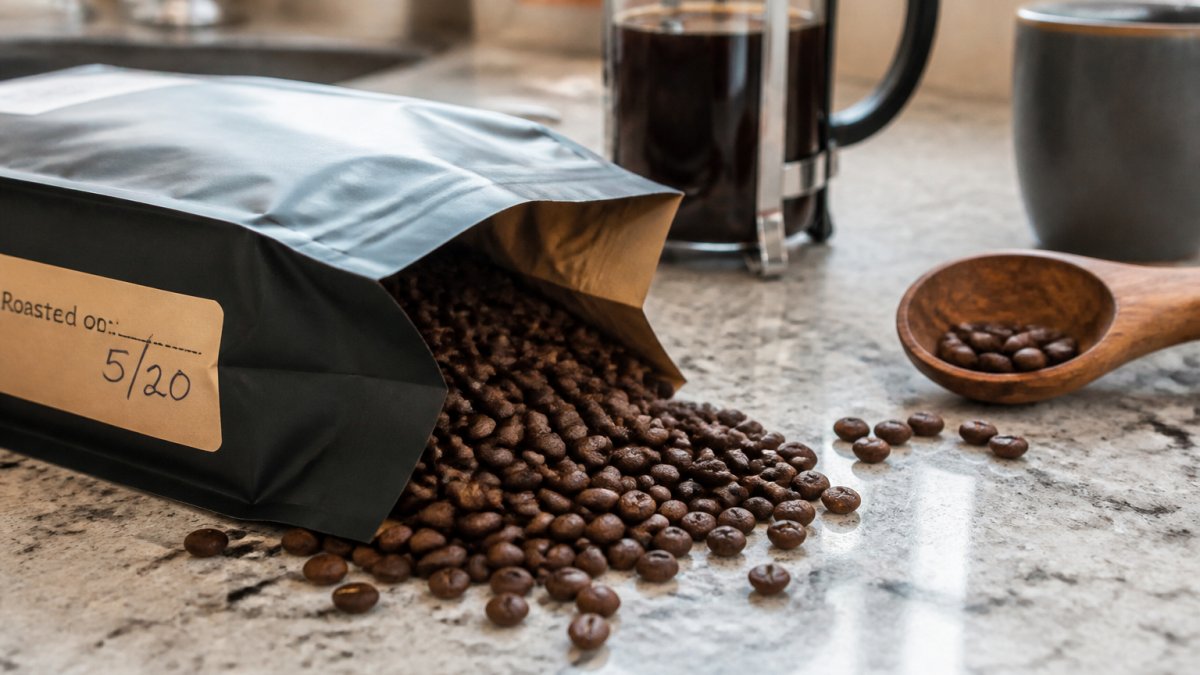
Most guides say "fresh" without defining it.
A short roast-to-delivery window also changes how you pack. Whole beans stay fresher longer than ground, and a sealed bag with minimal oxygen slows staling, packing matters as much as roasting.
How to Choose a Coffee Subscription That Fits Your Routine
Choosing a coffee subscription comes down to matching the plan to how you actually drink coffee. The best plan is the one you'll still want in month three.
Use this checklist before you commit:
- Match the grind to your brewer. Whole bean for espresso or pour-over; pre-ground for drip.
- Pick a cadence you'll finish. A monthly box you can't drink in time wastes money.
- Check the roast-to-delivery window. Shorter is better for flavor.
A sample pack is the lowest-risk way to test a roaster before paying for a full subscription.
The Real Cost of Subscription Box Delivery
The real cost of subscription box delivery is more than the product price: it's the sum of product, packaging, pick-and-pack labor, postage, storage, and failed deliveries.
Most subscription services fold packaging and labor into the product price and charge shipping separately. That's fair if the customer can see it; hiding costs behind "free shipping" usually means a higher product price instead.
The Six Cost Lines in a Delivered Box
Every box carries six cost lines. Some are paid directly by the customer; others are baked into the sticker price.
| Cost Line | What It Covers | Who Pays | How It Scales |
|---|---|---|---|
| Product | Coffee, tea, or goods in the box | Customer | Flat per unit |
| Packaging | Box, inserts, protective filler | Built into price | Flat per box, drops with bulk buying |
| Pick-and-pack labor | Picking, packing, labeling time | Built into price | Rises with order count, falls with batching |
| Postage | Carrier transit to the doorstep | Customer or built in | Rises with weight and distance |
| Storage | Warehouse space for inventory | Built into price | Rises with SKU count and seasonality |
| Returns and redelivery | Failed drops, replacements, reships | Business, usually | Spiky and hard to forecast |
A Worked Example: What One Box Actually Costs
Use a simple per-box model to see where the money goes. The numbers below are illustrative placeholders, substitute your own carrier, packaging, and labor quotes.
Best Sellers Sample Pack: 6Bean, Cowboy, Breakfast, Peru, Mexico, Bali →
- Product: the wholesale or landed cost of the coffee or goods inside.
- Packaging: the mailer or box, insert card, and any protective filler.
- Pick-and-pack labor: minutes per box multiplied by an hourly wage, divided by boxes packed per hour.
Postage and packaging often rival product cost on lighter boxes, while product dominates on heavier ones. Right-size the box: one size too large adds filler, weight, and postage on every shipment.
Where Failed Deliveries Hide in the Math
Failed deliveries are the quiet cost line. A missed drop triggers a redelivery, pickup notice, or replacement box, each adding carrier fees, labor, and sometimes product.
Track failed deliveries as a percentage of shipped boxes and multiply by your average replacement cost. That number belongs on the same cost sheet as postage, because it behaves like a variable shipping cost, not a one-off customer-service expense.
Sustainable Packaging and the Cost Trade-Off
Sustainable packaging is a real trade-off: recycled and compostable materials often cost more and protect less, and a lighter box may need more filler. Right-sized boxes and shipment consolidation, one box instead of two, usually cut cost and waste together.
Balance protection against waste, and say plainly what the packaging is made of. Customers who understand the trade-off are less likely to see sustainable packaging as a hidden surcharge.
In-House Fulfillment vs. 3PL for Subscription Boxes
In-house fulfillment means you pick, pack, and ship every box yourself; a third-party logistics provider (3PL) stores inventory and ships on your behalf. The choice depends on volume, control, cost, and how much of the delivery experience you want to own.
This decision connects doorstep delivery to the back office: pick wrong and either costs balloon or control slips away.
A Practical Setup Guide: From Signup to Doorstep
Whether you fulfill in-house or through a 3PL, the direct-to-door workflow follows the same steps. Walk through them in order before you commit.
- Define the box and cadence. Decide what ships, how often, and what the promised delivery window is. The window drives every downstream cutoff.
- Set the order cutoff. Work backward from carrier pickup. If pickup is at 3 p.m., the order cutoff must leave enough time to pick, pack, and label.
- Choose the fulfillment model. In-house for low volume and hands-on kitting; 3PL when volume, storage, or geography outgrow your space.
- Configure kitting and packaging. Standardize the box, insert, and filler so every packer builds the same box the same way.
- Connect the carrier. Set up label printing, tracking handoff, and a pickup schedule that matches your cutoff.
- Test one cycle end to end. Ship a small batch, watch tracking, and time each step before scaling.
- Instrument delivery performance. Track on-time rate, failed deliveries, and support tickets per hundred boxes from the first shipment.
Decision Framework: When In-House Wins
Pick in-house when:
- Volume is low enough that packing days do not crowd out sales, marketing, or product work.
- You want to hand-check every insert and sample, which matters for curated or gift boxes.
- You can staff packing days around your roast or production schedule.
In-house gives full control over kitting and presentation, but scaling speed is slow and storage is capped by your walls.
Decision Framework: When a 3PL Wins
Choose a 3PL when:
- Order volume outgrows your space or your team's packing capacity.
- You need storage in more than one region to shorten transit times.
- Seasonal demand spikes make hiring and training packers impractical.
A 3PL brings faster scaling and regional reach, but control over kitting is limited and upfront onboarding takes time and money.
Side-by-Side Comparison
| Factor | In-House | 3PL |
|---|---|---|
| Control over kitting | Full | Limited |
| Upfront cost | Lower | Higher |
| Scaling speed | Slow | Fast |
| Storage | Your space | Their warehouse |
| Shipping reach | Local or single-region | Multi-region |
| Seasonal flexibility | Limited by hiring | Contract-based |
| Best for | Small, hands-on brands | Growing volume |
The Delivery-Performance Angle
Fulfillment choice changes doorstep outcomes. A 3PL with regional warehouses shortens transit and reduces haul damage, but a hand-packed in-house box often presents better.
A common mistake is moving to a 3PL too early: at low volume, per-box fees and onboarding can outweigh savings. Move when packing days crowd out everything else, and re-run the cost sheet before you sign.
Measuring Delivery Performance and Customer Experience
Delivery reliability is measurable, and the numbers tell you where to fix the chain. Track a few core metrics every month:
- On-time delivery rate. Boxes that arrive inside the promised window.
- Failed delivery rate. Missed drops, redeliveries, and pickups.
- Roast-to-delivery days. The gap between roast date and arrival.
These four numbers show whether the problem sits in packing, carrier handoff, or the doorstep. Fix the weakest link first.
Conclusion
Every subscription box makes a promise at checkout, and the delivery chain either keeps it or breaks it. The fix is rarely dramatic. Match your cutoff to carrier pickup, send tracking early, protect the roast-to-delivery window, and measure failed deliveries like the cost they are.
At The Gilded Cafe' Co., we build our boxes around that same discipline. Start with a sample pack to test the roast, then step up to a plan that fits your routine.
Frequently Asked Questions
How does subscription box delivery work?
A subscription box delivery follows a set cycle: you choose a plan, the provider assembles your box, and it ships to your door on a recurring schedule. Most services process orders in batches, pack items into custom packaging, and hand off to a carrier for doorstep delivery. You receive tracking, and most providers let you pause, skip, or cancel before the next billing date. For coffee, the roast date matters most, so check whether the provider roasts after you order rather than shipping from older stock.
Can you choose when a subscription box is delivered?
Many services let you set a delivery schedule, such as the first week of each month, and some allow specific ship dates. If timing matters, ask whether the provider ships on a fixed calendar or on a rolling cycle from your signup date. For coffee beans delivered monthly, a fixed schedule keeps your supply steady. You can often pause a shipment before a vacation or shift the date, but check the cutoff window, since most providers lock orders a few days before packing.
What should you look for in a subscription box delivery service?
Look at four things: shipping cost and whether it is included, delivery reliability and tracking, packaging that protects the contents, and a clear policy for failed deliveries or returns. For a fresh roasted coffee subscription, add roast-to-ship time and whether beans arrive whole or ground. A provider that roasts in small batches and ships soon after gives you better flavor. Also confirm how to pause or cancel, and whether gift subscriptions can ship to a different address than your billing address.
Is a coffee subscription worth it compared to buying beans locally?
It depends on access and freshness. If your local roaster is close and you buy often, you may match the freshness of a subscription. If you want variety from renowned growing regions without hunting for it, a subscription delivers that to your door on a schedule. A sample pack is a low-cost way to test before committing: The Gilded Cafe' Co.'s Best Sellers Sample Pack includes six 2 oz packs for $24.99, so you can try roasts before choosing a monthly plan.
Ready to make your morning ritual feel effortless? Shop Coffee with The Gilded Cafe' Co. and get freshly roasted beans delivered straight to your doorstep.