 how-to
How to Tell if Coffee Beans Are Fresh: 7 Tests
Table of Contents
- Why Freshness Matters More Than You Think
- The 60-Second Visual Test for Fresh Coffee Beans
- The Coffee Bloom Test: Your First Brewing Clue
- Coffee Roast Date vs Expiration Date: What to Trust
- Smell and Taste: The Final Sensory Check
- The Best Way to Store Coffee Beans for Maximum Shelf Life
- Troubleshooting: What to Do With Coffee Past Its Prime
- Conclusion: Make Freshness a Daily Ritual
- Frequently Asked Questions
Last Updated: September 6, 2026
Why Freshness Matters More Than You Think
Coffee is perishable: once roasted, oxidation and degassing strip the volatile compounds behind aroma and flavor. Knowing how to tell if coffee beans are fresh is the most important skill for an excellent cup at home, because no brewing method can rescue flat beans.
At The Gilded Cafe' Co., we roast in small batches and ship quickly, but freshness continues in your kitchen. With a few simple tests, you can assess any bag in under a minute.
The 60-Second Visual Test for Fresh Coffee Beans
Start with your eyes before you grind. Freshly roasted coffee has a matte, slightly textured surface with a subtle sheen. As beans age, oils migrate to the surface, creating a glossy shine, a sign of advanced oxidation and beans past their prime.
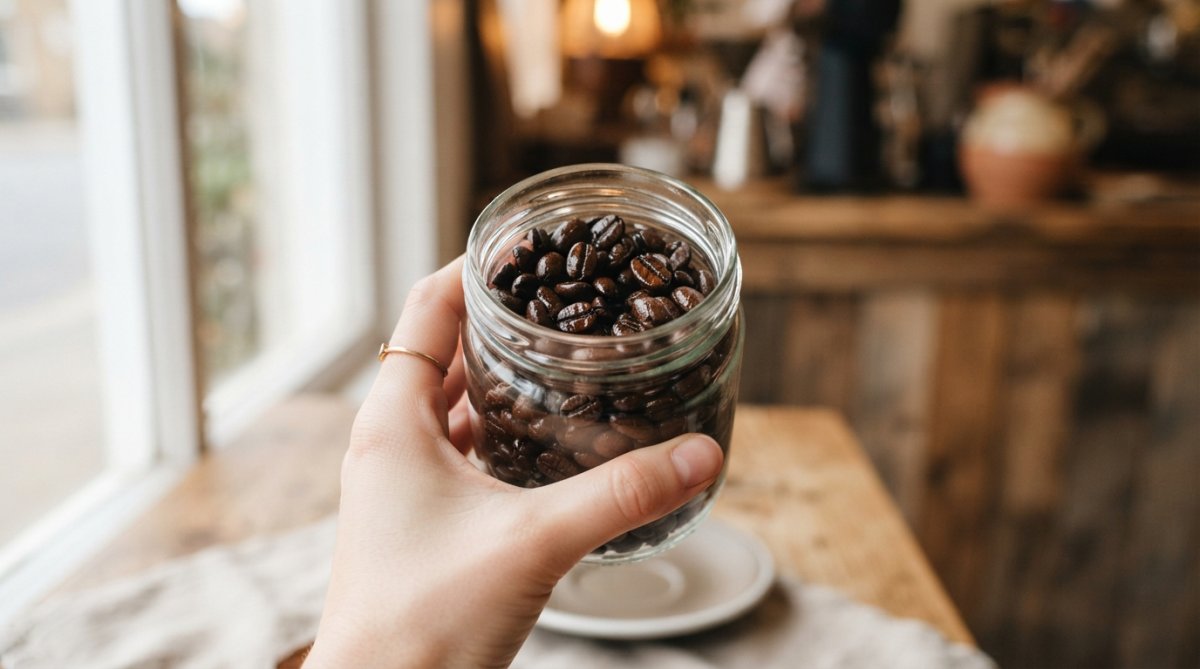
Here's what to look for:
- Glossy shine: A heavy, uniform oil coating suggests the beans have been sitting for weeks or months.
- Dull, dry surface: A light matte finish with minimal oil is typical of beans within their first two weeks post-roast.
- Uneven color: Fading or blotchiness indicates prolonged light exposure and degradation.
Caveat: dark roasts naturally show surface oil sooner than light roasts because roasting breaks down the bean structure more aggressively. A dark roast can look oily within days and still taste excellent.
Why the One-Size-Fits-All Visual Test Fails
The standard visual test assumes all beans age the same way. In reality, bean density and processing method dramatically change what "fresh" looks like.
Density matters. High-altitude beans from regions like Huila, Colombia, or Nyeri, Kenya, develop denser cellular structures, holding their structure longer so surface oil appears later. A dense, light-roasted bean can look nearly identical at day 3 and day 21. Lower-density beans from lower altitudes break down faster, pushing oils to the surface within days.
Processing method changes the timeline. Natural-processed coffees (dried inside the whole cherry) retain more sugars and show surface oil earlier than washed-process coffees of the same roast level because residual fruit sugars caramelize during roasting. Washed coffees have a cleaner surface that stays matte longer. Expect some sheen on a natural-processed coffee by week two; the same sheen on a washed coffee suggests it is further along in its staling curve.
A Practical Visual Decision Tree
Instead of relying on a single visual cue, use this decision tree that accounts for the bean's origin and processing:
- Identify the roast level. Light roasts (City or Cinnamon) will almost never look oily until they are truly stale. Medium roasts (Full City) show subtle sheen at 3-4 weeks. Dark roasts (Vienna or French) can look oily within 48 hours and remain perfectly fresh.
- Check the processing method. If the bag says "natural" or "honey," expect earlier oil migration. If it says "washed," a glossy surface is a stronger warning sign.
- Look for uneven dullness. Patches of dull, chalky areas alongside shinier spots indicate exposure to fluctuating humidity, which accelerates localized degradation.
- Crush a single bean. Place one bean on a hard surface and press down with your thumb. A fresh bean fractures with a clean snap and a visible internal structure. A stale bean tends to crush or crumble rather than snap cleanly. This test works across all roast levels and processing methods.
The Limits of the Visual Test
Visual inspection cannot detect the loss of aromatic volatiles that happens before oils appear. A light roast can lose 30-40% of its aromatic compounds while still looking matte and healthy. Always pair the visual test with the bloom test and a sensory check of the ground coffee's aroma.
Keep a small sample of beans from a known-fresh batch in an airtight container and compare your suspect beans against this reference. The difference in surface texture and color becomes obvious with a baseline to measure against.
The Coffee Bloom Test: Your First Brewing Clue
The bloom is the most reliable indicator of freshness because it measures active degassing. Freshly roasted coffee releases carbon dioxide for days. When hot water hits the grounds, this trapped gas escapes, causing the bed to swell and bubble, this reaction is the bloom.
To test your beans, grind a small amount and place it in your brewer. Pour just enough hot water (around 200°F) to saturate the grounds, then wait 30 seconds. A vigorous, bubbly expansion indicates recently roasted coffee. A weak, barely visible bloom means the beans have already released most of their carbon dioxide, and the flavor will be correspondingly flat.
The bloom test also improves extraction. Pouring a small amount of water first allows grounds to degas evenly, preventing channeling and producing a more balanced cup. Fresh beans should bloom enthusiastically for at least 20 to 30 seconds.
Coffee Roast Date vs Expiration Date: What to Trust
The expiration date is a legal requirement, not a quality indicator. It tells you when coffee may become unsafe, typically 12 to 18 months out. By that point, the beans have been lifeless for months.
The roast date is the only number that matters for flavor. Specialty roasters print this on the bag, often within days of roasting. Coffee reaches peak flavor between 4 and 14 days after roasting, when the most aggressive degassing is finished but aromatic complexity remains. Most roasters recommend consuming beans within 4 to 6 weeks of the roast date.
If a bag has no roast date, treat it with suspicion. Large commercial brands often omit this information because their distribution chains are too slow to guarantee freshness. When in doubt, check the Specialty Coffee Association's freshness guidelines for industry-backed recommendations on storage and peak consumption windows.
Smell and Taste: The Final Sensory Check
Your nose is the final arbiter. Freshly roasted coffee should smell vibrant and aromatic, with distinct notes of chocolate, fruit, nuts, or florals depending on origin and roast. The fragrance of whole beans and the aroma of grounds should be pronounced and inviting.
Stale coffee smells flat, dusty, or even slightly papery. In the cup, the differences are unmistakable:
- Fresh coffee: Bright acidity, complex flavor profile, lingering pleasant aftertaste.
- Stale coffee: Hollow body, papery taste, muted or absent acidity, a generic "coffee-ish" flavor with no distinct character.
A common mistake is assuming strong-smelling coffee is fresh. Many commercial roasters add flavoring oils or rely on dark roasting to mask staleness. Trust the complexity of the smell, not just its strength. If your coffee tastes like it could be from any bag on the shelf, it has likely lost its origin character.
The Best Way to Store Coffee Beans for Maximum Shelf Life
Proper storage slows aging but cannot reverse it. The enemies of fresh coffee are oxygen, moisture, heat, and light. Minimize exposure to all four.
An airtight container is non-negotiable. Many bags have a one-way valve that lets carbon dioxide escape without letting oxygen in, excellent for the first week or two. Once opened, transfer beans to a dedicated canister with a sealed lid. Avoid clear glass jars on sunny counters, as light accelerates oxidation.
Store beans in a cool, dark cupboard, away from the stove or any heat source. The refrigerator is a poor choice because beans absorb moisture and odors. The freezer can work for long-term storage, but only if beans are in an airtight, moisture-proof container and you grind them frozen without thawing.
Here is a quick reference for storage decisions:
| Storage Method | Duration | Best For | Key Consideration |
|---|---|---|---|
| Original bag with one-way valve | 1-2 weeks | Daily use | Keep bag sealed, away from light |
| Airtight canister | Up to 4 weeks | Daily use after opening | Store in cool, dark cupboard |
| Freezer (airtight) | Up to 3 months | Bulk purchases | Grind frozen, never thaw and refreeze |
| Countertop (open) | Days | Immediate use only | Avoid unless consuming within days |
The Science of Humidity: Why Your Climate Changes Everything
Most storage advice assumes a moderate, stable environment. In humid climates, the Gulf Coast, the Pacific Northwest, or anywhere with summer dew points above 60°F, the rules change. Roasted coffee is hygroscopic, actively absorbing moisture from the air. At 50% relative humidity, beans reach equilibrium at roughly 10-11% moisture content; at 70%, that climbs toward 14-15%. This extra moisture accelerates the hydrolysis of chlorogenic acids (producing bitter, sour off-flavors) and creates an environment where mold can develop.
In dry climates like Arizona or Colorado, low humidity pulls moisture out of beans, making them brittle and accelerating the loss of volatile aromatic compounds. Beans in arid conditions can go stale faster than in moderate humidity, even at identical temperatures.
Temperature: The Arrhenius Effect in Your Kitchen
The chemical reactions that stale coffee follow the Arrhenius equation, for every 10°C (18°F) increase in temperature, oxidation roughly doubles. A cupboard above your oven or refrigerator can reach 85-90°F during cooking, effectively doubling the staling rate compared to a cabinet on an exterior wall at 72°F.
If your kitchen routinely exceeds 78°F, find a cooler storage spot, a basement pantry, bedroom closet, or hallway cabinet. Keep beans below 75°F without exposing them to the moisture problems of a refrigerator.
The Freezer Question: When It Works and When It Backfires
Freezing dramatically slows oxidation, but the problem is moisture. When you remove beans from a freezer, warm air hits the cold surface and condensation forms immediately, damaging the beans and introducing off-flavors.
If you freeze beans, follow these rules strictly:
- Portion before freezing. Divide beans into single-week portions in vacuum-sealed bags or airtight containers. Never open the main bag repeatedly.
- Grind frozen. Remove only the portion you need and grind immediately while still frozen. Do not let beans thaw on the counter.
- Never refreeze. Each freeze-thaw cycle causes cellular damage and moisture migration.
The One-Week Rule for Opened Bags
Regardless of storage method, once you open a bag, the clock accelerates. A sealed bag with a one-way valve protects beans for weeks. An opened bag, even in an airtight canister, loses quality noticeably after 7-10 days. Every time you open it, you introduce fresh oxygen and humidity.
For daily drinkers, buy beans in quantities you will consume within two weeks. For occasional drinkers, freeze portions immediately upon arrival. The best storage strategy is a purchasing habit that matches your consumption rate.
Troubleshooting: What to Do With Coffee Past Its Prime
Even with perfect storage, coffee eventually goes stale. Before you toss that bag, consider whether it still has a use. Stale beans are not dangerous, just disappointing in a pour-over. The National Coffee Association's brewing resources note that while flavor degrades, the beans remain safe to consume well past their peak.
For beans that are slightly past their prime, try these rescue methods:
- Grind finer. Finer grounds increase extraction surface area, pulling more flavor from beans that have lost volatile compounds.
- Use a higher coffee-to-water ratio. Adding 10-15% more coffee can compensate for the muted flavor.
- Brew with a longer contact time. A French press or cold brew method extracts more thoroughly than a quick pour-over.
- Switch to cold brew. The long, cold extraction process is remarkably forgiving and produces a smooth, sweet concentrate from beans that would taste flat when brewed hot.
If the beans smell rancid, dusty, or have visible mold, discard them. No brewing technique can fix beans that have absorbed moisture or been stored improperly for months. The FDA guidance on food storage and safety recommends discarding any food product that shows signs of spoilage.
Conclusion: Make Freshness a Daily Ritual
Learning how to tell if coffee beans are fresh transforms your daily cup from a routine into a ritual. The visual test, the bloom, and the sensory checks take less than a minute and pay off in every brew. Once you experience the difference between a bean at its peak and one that has gone flat, you will never settle for stale coffee again.
The easiest way to ensure freshness is to buy from a roaster that prioritizes it. At The Gilded Cafe' Co., we roast in small batches and ship directly to your door, so your beans arrive within days of roasting, not weeks. Our Best Sellers Sample Pack lets you compare six distinct blends while they are at their freshest, and our Single Origin Favorites Sample Pack showcases the terroir of renowned growing regions. Start with a sample pack to find your favorite, then make fresh coffee a non-negotiable part of your morning.


Frequently Asked Questions
Are 2 year old coffee beans still good to brew?
Two-year-old beans are safe to consume but will taste flat and papery. Coffee is a food product, not a hazardous one; staleness is about flavor loss, not safety. After 24 months, the aromatic oils have oxidized completely, so you will get a hollow body with no origin character. Use them only if you have no alternative, and consider cold brewing, which is more forgiving with older beans. For the best cup, always check the roast date and buy within a few weeks of roasting.
How long does coffee stay fresh after it's ground?
Ground coffee loses its volatile aroma compounds much faster than whole beans because grinding increases the surface area exposed to oxygen. Expect ground coffee to lose its peak flavor within 15 to 20 minutes after grinding. For brewing, aim to use pre-ground coffee within one to two weeks of the roast date, stored in an airtight container. For the freshest cup, grind whole beans immediately before brewing, as this preserves the delicate oils and carbon dioxide that carry flavor.
Do coffee beans lose flavor if stored in the freezer?
Freezing can help extend shelf life, but it risks flavor loss if done incorrectly. Moisture is the enemy: when you remove beans from a cold freezer, condensation forms on the surface, which degrades quality. Only freeze beans in an airtight, vacuum-sealed container, and portion them so you only remove what you need once. Never refreeze thawed beans. For most home brewers, storing beans in a cool, dark cabinet in an opaque, airtight container is the simpler and more reliable choice.
What is the 15-15-15 rule for coffee freshness?
The 15-15-15 rule is a guideline for buying and using coffee. It suggests you should buy coffee within 15 days of its roast date, grind it within 15 minutes of brewing, and consume the brewed coffee within 15 minutes of pouring. This rule emphasizes that freshness is a timeline that starts at the roaster and ends in your cup. While the exact numbers are flexible, the principle holds: the closer you are to the roast date, the more vibrant your cup will be.
Freshness is not a luxury; it is the foundation of great coffee. Get started with The Gilded Cafe' Co. and taste what freshly roasted, small-batch beans can do for your daily brew.