 ultimate-guide
Is Specialty Coffee Worth the Price in 2026?
Table of Contents
- The Real Cost of a Cup: What You're Actually Paying For
- Specialty Coffee vs Commercial Coffee: The Quality Gap
- How to Identify High Quality Coffee Beans Before You Buy
- Coffee Brewing Methods for Beginners: Equipment ROI at Home
- The 'Acquired Taste' Curve: Why the First Week Feels Intense
- The Environmental Footprint of Your Morning Cup
- Why Specialty Coffee Costs More: Sourcing, Roasting, and Fair Trade
- Conclusion: When the Price Is Worth It (and When It Isn't)
- Frequently Asked Questions
Last Updated: September 13, 2026
The Real Cost of a Cup: What You're Actually Paying For
Is specialty coffee worth the price? For most daily drinkers, yes, once you run the math per cup. A $23.99 bag of single-origin beans from The Gilded Cafe' Co. brews roughly 15 to 16 cups, near $1.50 per mug.
Specialty coffee is coffee that scores 80 points or higher on the Specialty Coffee Association's 100-point scale, is grown at high elevation, and is traceable to a specific farm or region.
Most buyers compare a $24 bag against a $9 grocery tub and stop there. The comparison only holds if you also weigh what is in the bag, how fresh it is, and how far it stretches.
The Cost-Per-Cup Math That Changes Everything
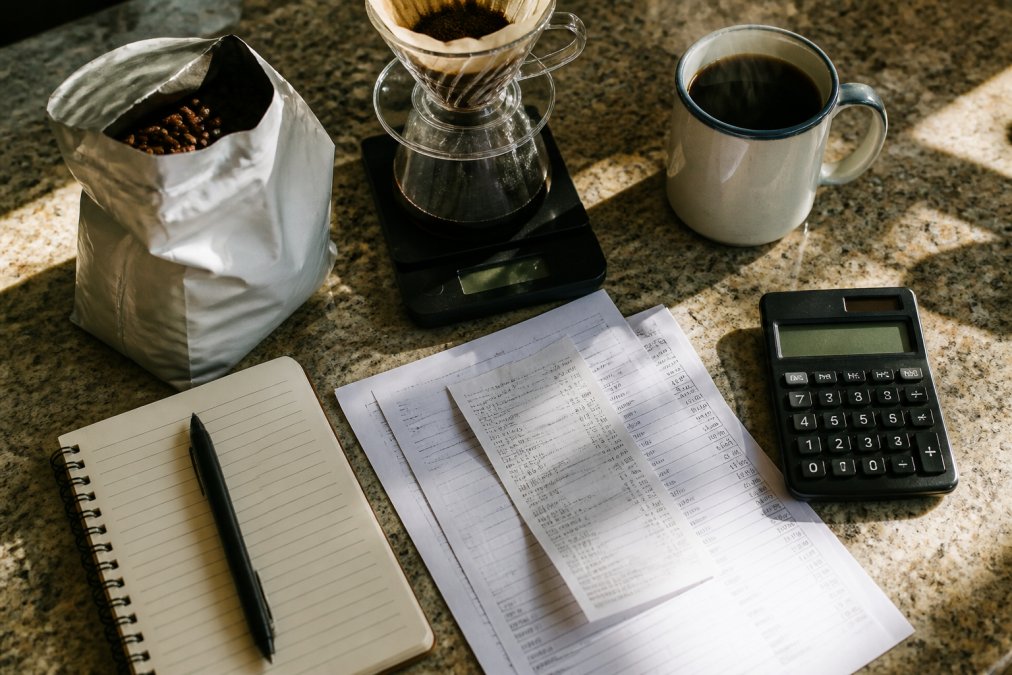
A standard 12-ounce bag yields about 15 to 16 cups when you dose 20 to 22 grams per brew, roughly $1.50 per cup at $23.99. Commercial pre-ground coffee fades fast, so people brew stronger or toss stale grounds early, narrowing the gap more than the sticker suggests.
| Coffee Type | Bag Price | Cups Per Bag | Cost Per Cup |
|---|---|---|---|
| Single-origin specialty | $23.99 | 15-16 | About $1.50 |
| Commercial grocery | $9-12 | 12-14 | About $0.75-0.90 |
| Café drip | $3-4 per cup | N/A | $3-4 |
A café charges two to three times more for a cup you drink in ten minutes. Brewed at home, specialty coffee is the cheaper habit.
Specialty Coffee vs Commercial Coffee: The Quality Gap
The gap between specialty coffee and commercial coffee comes down to grading, sourcing, and freshness, not marketing language. Commercial coffee blends commodity-grade beans roasted in large batches for shelf stability; specialty coffee is graded for defects, traced to a farm or cooperative, and roasted to suit the bean.
That difference shows up in the cup. Commercial beans often taste flat or ashy because the roast is pushed dark to hide inconsistency; specialty beans carry origin-tied notes like fruit and cocoa in a Colombian lot or floral citrus in an Ethiopian one.
Cupping Score, Sourcing Transparency, and What the SCA Actually Measures
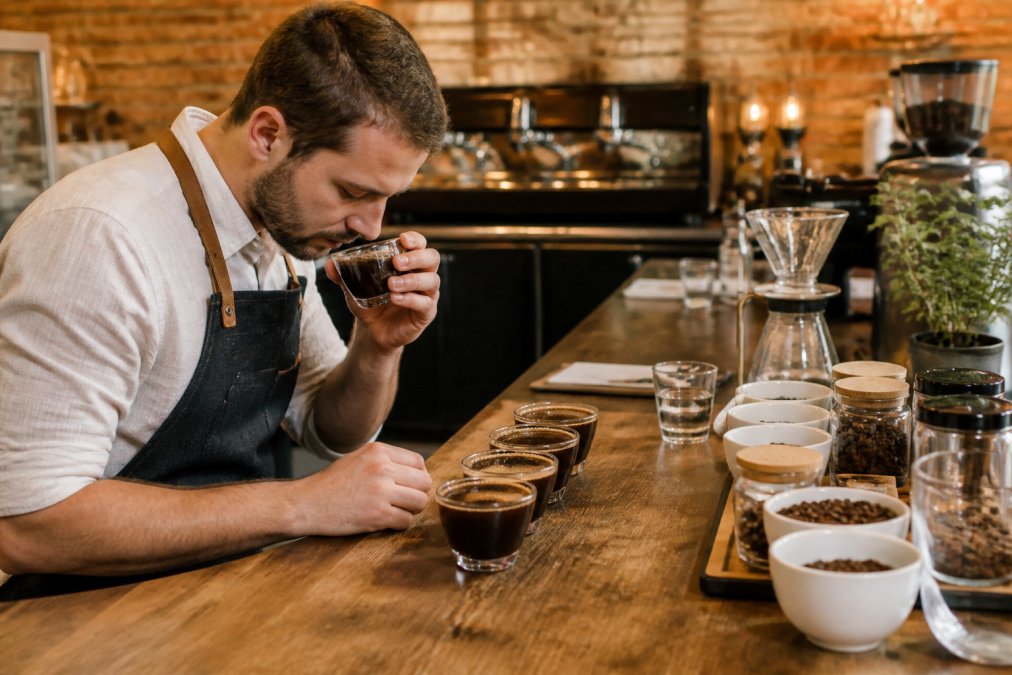
The cupping score is a standardized evaluation where trained tasters rate aroma, acidity, body, flavor, aftertaste, balance, and sweetness on a 100-point scale. Beans scoring 80 or above qualify as specialty. The Specialty Coffee Association's cupping standards outline how those categories are scored.
Sourcing transparency matters just as much. A bag naming the region, altitude, and processing method tells you the roaster knows the supply chain. Vague labels like "mountain grown" tell you nothing.
- Acidity: the bright, lively quality, not sourness
- Body: the weight and texture on your tongue
- Mouthfeel: how the coffee coats the palate
- Flavor notes: the specific tastes the roast reveals
How to Identify High Quality Coffee Beans Before You Buy
You can identify high quality coffee beans by checking three things before you spend: the roast date, the origin detail, and the processing method. Skip any bag that hides all three.
Freshly roasted beans carry a printed roast date, not just a "best by" stamp. That date is the single best freshness signal on the shelf.
Roast Dates, Degassing, and Shelf Life: What Freshness Really Means
Coffee releases carbon dioxide for several days after roasting, a process called degassing. Brew too soon and the gas disrupts extraction, which is why a fresh bag can taste flat on day two and excellent on day seven. Peak flavor usually lands four to fourteen days after the roast date.
Shelf life runs shorter than most people assume. Whole beans hold quality for roughly four to six weeks past roasting when stored away from light, heat, and air; pre-ground coffee loses aromatics within days. Store beans airtight at room temperature, never in the fridge.
Coffee Brewing Methods for Beginners: Equipment ROI at Home
Most articles answer "is specialty coffee worth the price" by comparing bean prices and stopping there. That math is incomplete: a $24 bag only delivers its full value if your grinder and brewer can extract it.
The best brewing method for beginners is the one that fits your morning routine, because equipment only pays off if you actually use it. A pour-over dripper and a burr grinder cost less than two months of café visits and last for years.
The Grinder Is the Whole Equation
A blade grinder, the $20 spinning-blade kind sold in grocery aisles, chops beans into a mix of powder and boulders, so some grounds over-extract into bitterness while others under-extract into sourness in the same cup. A burr grinder crushes beans between two abrasive surfaces set to a fixed gap, producing uniform particles. Hand burr grinders start around $40 to $60; electric burr grinders with steel burrs typically run $100 to $200, a one-time cost amortized across hundreds of brews.
Run the numbers. If a $150 burr grinder lasts five years and you brew one cup a day, that is roughly 1,825 cups, or about 8 cents per cup. Against a $3 to $4 café drip, the grinder pays for itself inside two months.
Brewer Cost-Per-Cup Comparison
| Brewer | Upfront Cost | Ongoing Cost | Skill Floor |
|---|---|---|---|
| French press | $20-$40 | Paper filters not needed | Low |
| Pour-over dripper | $15-$40 | Paper filters, roughly $0.05-$0.10 per brew | Medium |
| Drip machine (SCA-certified) | $100-$250 | Paper filters | Low |
| Espresso machine | $300-$1,500+ | Requires a quality grinder to match | High |
A French press or basic pour-over cone gets a beginner 80 to 90 percent of the way to a great cup for under $50, provided the grinder is good. Espresso is the outlier: it demands a capable grinder and a learning curve, and cheap equipment reliably produces bad results from good beans.
What Actually Moves Cup Quality
Ranked by impact per dollar spent:
- Bean freshness and quality, the single largest variable
- Grinder consistency, the multiplier on everything else
- Water temperature and ratio, free to fix with a thermometer and a scale
- Brewer type, the smallest marginal gain once the first three are handled
A digital scale (grams in, grams out) costs $15 to $25 and removes the guesswork that ruins otherwise good coffee. A gooseneck kettle helps with pour-over control but is optional for press brewing.
The bloom is the first pour, where you wet the grounds and wait 30 to 45 seconds for the gas to escape. Skipping it is the most common beginner mistake and the easiest to fix.
When Equipment ROI Turns Negative
Specialty coffee is not worth the price if you never upgrade past a blade grinder and a $30 drip machine with a scorched hot plate. In that setup, a $24 bag performs about the same as a $10 bag, because the brew method cannot express the difference. Either upgrade the grinder or buy cheaper beans and accept the trade-off.
The 'Acquired Taste' Curve: Why the First Week Feels Intense
Your first week of specialty coffee often tastes too bright, too acidic, or too thin compared with what you are used to. That is not a flaw in the beans. It is your palate recalibrating after years of dark, uniform roasts.
Commercial coffee tastes the same every time because it is engineered for consistency; specialty coffee varies by origin, roast profile, and processing method, so the experience shifts bag to bag. Give it a week of daily cups before you judge, most drinkers find the brightness they disliked on day one becomes the reason they stay.
A washed process produces a clean, crisp cup. A natural process leans fruitier and heavier. A honey process sits between the two. Trying one of each teaches you more about your own taste than any description can.
The Environmental Footprint of Your Morning Cup
Coffee's environmental footprint depends heavily on how it is grown, processed, and shipped, and specialty supply chains are not automatically greener. What they offer is traceability, which makes it possible to verify claims about shade growing, water use, and farm practices that commodity supply chains cannot confirm. That verification is the actual environmental value of specialty coffee, not the price tag.
Where the Footprint Actually Comes From
Coffee's emissions break down into three stages, and the split surprises most drinkers:
- Farm and processing: fertilizer use, water consumption during washing, and methane from decomposing pulp. This is the largest single slice for most beans.
- Transport and roasting: shipping green beans by sea is relatively efficient per pound; roasting is energy-intensive but brief.
- Home brewing and packaging: the stage the drinker controls directly, and the one where daily habits compound fastest.
The brewing stage can rival or exceed transport emissions over the life of a bag, because heating water for every cup adds up. The drinker's own behavior is a meaningful lever.
Washed, Natural, and Honey: Water and Waste Trade-offs
Processing method is an environmental variable, not just a flavor one. Washed processing uses large volumes of water to remove the fruit from the seed, and the wastewater can carry high organic loads if untreated. Natural processing skips the wash and dries the whole cherry in the sun, cutting water use sharply but requiring more land and labor. Honey processing sits between the two.
None of these is universally "better." A natural process in a water-scarce region can be the lower-impact choice; a washed process with recirculated water and proper treatment can outperform a poorly managed natural lot. The roaster's sourcing notes tell you which case you are buying into.
Certifications and What They Actually Verify
Fair trade certification sets a floor price and adds a social premium paid to cooperatives; it is a farmer-income mechanism first, with real but secondary environmental requirements. Organic certification restricts synthetic fertilizers and pesticides at the farm level, affecting soil and water quality directly. Rainforest Alliance and similar programs combine social and environmental criteria, including shade management and water treatment.
A roaster that publishes direct-trade relationships and farm-level detail offers something certifications cannot: verifiable specifics about a named producer. That transparency is the strongest environmental signal available to a consumer, because it can be checked.
The Packaging and Single-Serve Problem
Whole beans in recyclable or compostable packaging carry the lowest per-cup footprint of any format, because there is no brewing hardware to discard and no individual serving wrapper. Single-serve pods generate a plastic or aluminum capsule per cup, and the waste scales with how much you drink. Even recyclable pods require energy to collect and reprocess, and many municipal programs do not accept them.
Paper filters are compostable and add negligible waste compared to pods; a French press or metal-filter pour-over eliminates the filter entirely. Buying whole beans in quantities you will finish within a month beats stockpiling, because coffee that goes stale and gets thrown out carries all the emissions of production with none of the benefit.
The Honest Trade-off
Specialty coffee's environmental case is not that it is automatically low-impact. It is that the supply chain is documented enough that a buyer can choose a lower-impact lot on purpose. Commodity coffee often hides farm-level practices behind anonymous blends, making any environmental claim unverifiable. The premium you pay for specialty buys traceability, and traceability turns an environmental claim into something you can actually check.
Why Specialty Coffee Costs More: Sourcing, Roasting, and Fair Trade
Specialty coffee costs more because of four real inputs: selective harvesting, small-batch roasting, traceable sourcing, and the premium paid to growers. None are branding overhead.
Sourcing starts with picking only ripe cherries by hand, sometimes multiple passes over the same trees, labor that costs more than strip harvesting. Roast profile development takes sample roasts and cupping sessions before a lot is released, which small-batch roasters absorb per bag rather than spreading across millions of units.
Fair trade and direct trade both raise the price floor paid at origin, and that cost travels up the supply chain. Premium pricing also reflects smaller volumes: a roaster working in 12-kilogram batches cannot match the per-unit economics of a plant running continuous roasts.
The trade-off is real. You pay more per bag and get a product with a known origin, a recent roast date, and a flavor profile that reflects where it grew. That value-for-money case holds as long as the beans are fresh when they reach you.
For a first order, [a sampler like the Single Origin Favorites Sample Pack](https://thegildedcafe.com/products/single-origin-favorites-sample-pack) lets you test several origins in 2-ounce packs before committing to a full bag. If you already know you like a balanced, fruit-forward cup, the Colombia Single Origin is the safest starting point, while the Ethiopia Single Origin suits drinkers who want a brighter, more floral profile.


Conclusion: When the Price Is Worth It (and When It Isn't)
Specialty coffee earns its price when you drink it daily, brew at home, and value knowing where your beans came from. It makes less sense if you drink one cup a week or never got past a pod machine, because freshness fades before you finish the bag.
The math is the deciding factor. At roughly $1.50 per home-brewed cup, a small-batch roast costs less than a café drip and delivers more flavor, provided it arrives fresh and you grind it yourself.
If your current coffee tastes flat no matter how you brew it, the problem is usually the bean, not your technique. The Gilded Cafe' Co. roasts in small batches and ships direct to your door, so the bag that lands on your counter still has its peak flavor ahead of it. Start with the single-origin lineup, add a sample pack if you are still finding your profile, and let the roast date on the bag do the convincing. Get started with The Gilded Cafe' Co. and taste what fresh, traceable coffee actually delivers in the cup.
Frequently Asked Questions
What factors contribute to the higher price of specialty coffee?
Specialty coffee costs more because of where and how it's grown, picked, and roasted. Farms harvest only ripe cherries by hand, which raises labor costs. Beans must score 80 or above on the Specialty Coffee Association scale. Small-batch roasting, direct trade relationships with producers, and lower yields per acre all add to the final price. The result is a cup with traceable flavor notes, higher clarity, and fewer defects than commodity coffee.
Is the investment in specialty coffee equipment worth it for beginners?
A basic setup, like a burr grinder and a pour-over dripper or French press, costs less than $100 and pays for itself within about two months if you were buying $5 cafe drinks daily. A burr grinder matters most because it creates even particles for consistent extraction. You do not need an espresso machine to enjoy specialty coffee. Start with a pour-over cone, a scale, and freshly roasted beans. Upgrade later if you want more control.
Does fresh roasting actually change the flavor profile of coffee?
Yes. Coffee releases carbon dioxide for 4 to 12 days after roasting, a process called degassing. Brewing during peak degassing can make a cup taste flat or sour. Most roasters recommend waiting 5 to 10 days after the roast date for pour-over and 10 to 14 days for espresso. After that window, flavor notes fade. Buying from a roaster that prints the roast date on the bag, not just a best-by date, is the simplest way to taste the difference.
How does the Specialty Coffee Association define quality?
The SCA uses a 100-point scale evaluated by certified Q graders. Coffees scoring 80 or above are classified as specialty. Graders assess fragrance, flavor, acidity, body, balance, and sweetness, and deduct points for defects like quakers or mold. A cupping score of 80 to 84 is very good, 85 to 89 is excellent, and 90 or above is outstanding. This score is the most objective quality marker available to buyers.