 ultimate-guide
Why Is Small Batch Coffee Better? A 2026 Guide
Table of Contents
- What Makes Small Batch Coffee Different
- Small Batch vs Commercial Coffee: Key Differences
- Benefits of Small Batch Coffee Roasting for Flavor and Freshness
- How to Identify High Quality Coffee Beans
- Environmental Impact and Ethical Sourcing in Small Batch Coffee
- Home Brewing Calibration: Getting the Most from Small Batch Beans
- Subscription vs Retail Shelf Life: Which Keeps Coffee Fresher?
- Frequently Asked Questions
Last Updated: September 10, 2026
What Makes Small Batch Coffee Different
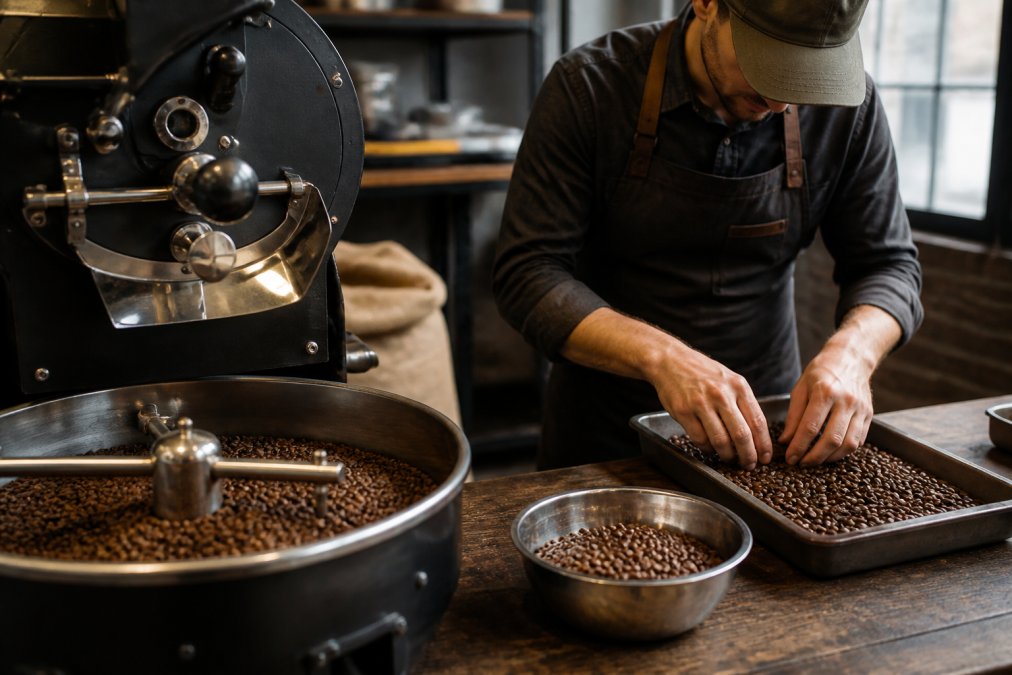
Small batch coffee is roasted in limited quantities, typically under 25 kilograms per cycle, with close attention to temperature, airflow, and timing. This lets a roastmaster adjust in real time rather than relying on automated profiles built for volume. This lets a roastmaster adjust in real time rather than relying on automated profiles built for volume.
The difference starts with the roastmaster. In small-scale production, one person watches the roast curve and makes decisions based on smell, sound, and color changes, attention that's impossible when a commercial roaster processes hundreds of kilograms per hour on a fixed schedule.
The Roastmaster's Role in Small-Scale Production
A roastmaster reads the bean, not just the clock. Green coffee varies in density, moisture, and size by origin and harvest, so a skilled roastmaster adjusts heat ramp and airflow in real time.
That window is narrow. The Maillard reaction and caramelization happen within minutes, and once you've pushed past the ideal point, there's no going back. Small batches give the roastmaster room to react before it closes.
Small Batch vs Commercial Coffee: Key Differences
The core difference is control: commercial roasting prioritizes uniformity across enormous volumes, while small batch roasting prioritizes precision for each lot.
| Factor | Small Batch Roasting | Commercial Roasting |
|---|---|---|
| Batch size | Under 25 kg | Hundreds of kg per hour |
| Roast monitoring | Manual, per-batch adjustments | Automated, fixed profiles |
| Flavor expression | Origin-specific, nuanced | Consistent but generalized |
| Freshness window | Days to weeks after roast | Weeks to months on shelf |
| Waste and overproduction | Minimal, roast-to-order | Higher, inventory-driven |
How Batch Size Affects Flavor and Consistency
Smaller batches heat more evenly because thermal mass is easier to manage. When a drum roaster is packed too full, airflow suffers and beans roast unevenly, creating defects like tipping or scorching.
Consistency in small batch roasting comes from the roastmaster's ability to replicate a proven roast curve batch after batch, hitting the same target flavor profile reliably.
Benefits of Small Batch Coffee Roasting for Flavor and Freshness
The biggest benefit of small batch coffee roasting is freshness. Beans roasted in small quantities can ship within days rather than sitting in a warehouse, and coffee begins degassing and losing aromatic compounds almost immediately after roasting.
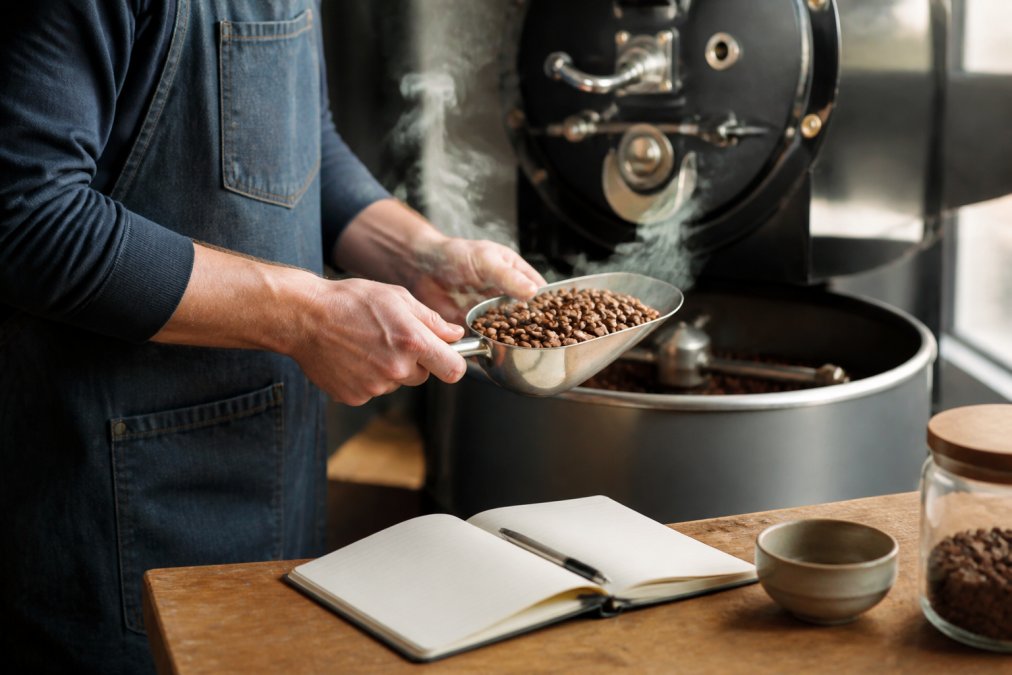
A second benefit is flavor clarity. Precision roasting lets natural acidity, body and mouthfeel, and aroma development come through more distinctly, especially in single-origin lots, where each origin's character is the whole point.
Precision Roasting: Heat, Airflow, and the Roast Curve
Precision roasting means managing three variables together: heat ramp, airflow, and time. The roast curve is the plotted record of bean temperature over time, and it's the roastmaster's primary tool for hitting a target flavor profile.
Adjusting airflow changes how quickly moisture escapes the bean; adjusting heat changes how fast sugars caramelize. Get these out of balance and you either stall the roast or race past first crack. Small batch roasters can spend more time dialing in each origin rather than applying one profile to everything.
How to Identify High Quality Coffee Beans
High quality coffee beans share a few observable traits: a clear roast date, a named origin or region, and a roast level that matches the bean's character. Start with the label.

Reading Roast Dates, Origin Labels, and Certification Marks
A roast date tells you more than a best-by date ever will. Coffee is at its best within roughly two to four weeks after roasting, depending on the bean and storage method.
Origin labels matter too. "Single-origin" means the beans come from one region, letting you taste that region's specific flavor profile; blends are designed for consistency rather than origin expression. Look for named growing regions, altitude ranges, and processing methods like washed or pulped natural.
Certification marks are worth checking, but read them carefully, Fairtrade and organic verify different things. Supply chain transparency, meaning the roaster can tell you who grew the beans and where, is often a better signal than any single logo.
Environmental Impact and Ethical Sourcing in Small Batch Coffee
Most articles on small batch coffee stop at 'less waste.' The harder question is where the environmental math actually tilts in favor of small-scale roasting, and where it doesn't.
Energy and Emissions: Where Small Batch Wins and Loses
The core trade-off is thermal efficiency versus production scale. Industrial drum roasters run continuously at high volume, so energy cost per pound can be lower once the machine is at operating temperature, but only if it stays fully loaded. A commercial roaster at partial capacity is one of the least efficient ways to roast coffee, because the drum, afterburner, and exhaust all draw power regardless of how many beans are inside.
Small batch roasting flips that equation. A 12-kilogram drum roaster that runs only when there's an order doesn't carry idle load, but smaller drums lose heat faster between batches, so the metal must be re-warmed each cycle. Most small roasters offset this by batching back-to-back on roast days rather than firing up for a single lot.
A few concrete levers that actually move the needle:
- Afterburner duty cycle. Roasting generates volatile organic compounds and smoke that regulators in many states require to be destroyed via afterburner. An afterburner running at full temperature for a 12 kg batch burns roughly the same fuel as one running for a 120 kg batch, so the emissions-per-pound penalty for small batches is real unless the roaster sequences roasts tightly.
- Roast-to-order vs. roast-to-inventory. Coffee that's roasted and then discarded or marked down is wasted embodied carbon, the farming, shipping, and roasting emissions are already spent. Small batch roasters who roast to demand can avoid this; commercial roasters filling shelf space often don't.
- Packaging. Direct-to-door small roasters typically ship in smaller, lighter bags, which reduces per-unit material but increases the number of parcels moving through the last mile. That last-mile leg is usually the single largest emissions component of a bag of coffee, which is why consolidated shipping matters more than bag weight.
Sourcing: What 'Direct Relationship' Actually Means
'Direct trade' is not a regulated term. Unlike Fair Trade Certified or USDA Organic, anyone can print it on a bag without third-party verification. That doesn't make it meaningless, it makes it a claim you should test.
A roaster with a genuine direct relationship can often answer three questions without checking notes:
- Who grew the coffee? A farm name, a cooperative name, or a specific producer. 'A small farm in Guatemala' is not an answer.
- What did they pay? Many specialty roasters publish farmgate prices or FOB prices on their lot pages. If a roaster won't discuss price at all, that's a signal.
- How long has the relationship existed? Multi-year relationships are the ones that fund farm-level investment, new drying beds, better processing equipment, replanting. One-off purchases at a premium don't.
Certifications still matter, but they verify different things. USDA Organic covers growing and processing practices, not price paid to farmers. Fair Trade Certified sets a minimum price floor and social premium, but the floor is well below what most specialty lots command. Rainforest Alliance focuses on environmental and social criteria at the farm level. None replace transparency about who grew the coffee and what they were paid.
The Honest Trade-Off
Small batch roasting is not automatically lower-impact. A small roaster shipping single bags via air freight can have a higher carbon footprint per pound than a commercial roaster moving pallets by rail. The environmental case rests on three things: roasting to demand instead of to inventory, sequencing roasts to amortize warm-up and afterburner load, and sourcing that pays farmers enough to keep producing. Where a roaster does all three, the advantage can be real. Where they don't, 'small batch' is a size, not a virtue.
Home Brewing Calibration: Getting the Most from Small Batch Beans
Small batch beans reward calibration more than commodity coffee does, because their flavor differences are more pronounced. An inconsistent brew method loses the very qualities you paid for.
Start with these adjustments:
- Grind fresh, and grind finer for pour-over. Small batch beans often need a slightly finer grind than supermarket coffee to extract their full flavor profile.
- Weigh your coffee and water. A kitchen scale removes guesswork. A common starting ratio is 1 gram of coffee to 15-17 grams of water.
- Match water temperature to roast level. Lighter roasts generally want water closer to 200-205°F, while darker roasts do better a few degrees lower.
- Adjust one variable at a time. Change grind size, taste, then change again. Changing everything at once makes it impossible to know what worked.
- Give beans a few days to degas. Coffee releases carbon dioxide after roasting, which can make very fresh beans brew unevenly. A short rest helps.
If you're new to specialty coffee, a sampler is the easiest way to calibrate your palate and your method at the same time. The Single Origin Favorites Sample Pack includes six 2-ounce packs so you can compare origins side by side without committing to a full bag.

Subscription vs Retail Shelf Life: Which Keeps Coffee Fresher?
The freshness question isn't really subscription versus retail. It's roast-to-door time versus roast-to-shelf time, and the difference is measured in weeks, not days.
The Two Clocks on a Bag of Coffee
Every bag of coffee runs two timelines at once. The first is the degassing window, the roughly 4 to 14 days after roasting when beans release carbon dioxide fast enough to disrupt extraction; brew too soon and the CO2 pushes water away from the grounds, producing a thin, uneven cup. The second is the aromatic decline, the slower loss of volatile compounds that give coffee its origin character, most of which happens in the first three to four weeks, then flattens into a long, gradual fade.
The practical sweet spot for most beans is roughly day 4 through day 21 post-roast. Before day 4, you're fighting degassing. After day 21, you're drinking a coffee that's still fine but no longer showing what it was roasted to show.
What Retail Shelf Life Actually Looks Like
A bag on a grocery shelf has already burned through part of that window before you see it. The path typically runs: roast date → roaster's warehouse → distributor → regional warehouse → store backroom → shelf. Each handoff adds days. By the time a bag reaches a shelf, it's commonly two to eight weeks past roast, and the only date printed is usually a 'best by' stamp set 6 to 12 months out, which tells you nothing about when the coffee was actually roasted.
One-way valve bags slow the decline but don't stop it. The valve lets CO2 escape without letting oxygen in, protecting against staling but doing nothing to preserve the volatile aromatics already leaving the bean.
What Roast-to-Door Actually Looks Like
A roaster shipping direct typically roasts on a fixed schedule, often two to four roast days per week, and ships the same day or next, which can put a bag in a customer's hands between day 2 and day 7 post-roast, right at the front edge of the ideal window.
The variable is the roaster's cadence, not the model. A subscription shipping monthly from a roaster who roasts weekly beats a retail bag, but one shipping the day after roast is fresher still. Three questions separate the two:
- What days do you roast? A roaster who roasts Monday and Thursday and ships same-day can be running a tight loop. A roaster who roasts 'as orders come in' may be batching less predictably.
- When does my order ship relative to roast? Same-day or next-day is the target. A three-to-five-day gap between roast and ship is a yellow flag.
- Is the roast date printed on the bag? It should be. A roaster confident in their freshness timeline prints the date; one who doesn't may be less transparent.
The Retail Advantage Nobody Mentions
Retail has one genuine edge: you can inspect the bag before you buy. If a store stocks a local roaster and you can read a roast date within the last two weeks, that bag is as fresh as most subscriptions, and you skip the shipping wait. The catch is that most grocery and big-box shelves don't carry locally roasted, date-stamped coffee, so this advantage only exists in stores that specifically stock it.
How to Decide
If you drink coffee daily and go through a bag in two to three weeks, a subscription or direct-from-roaster purchase almost always wins on freshness, because it collapses the distribution chain to a single hop. If you drink slowly, buy smaller bags more often, a 12-ounce bag finished in two weeks beats a 2-pound bag finished in two months every time.
Frequently Asked Questions
Is small batch coffee actually better than mass-produced coffee?
Small batch coffee is generally better for flavor and freshness because it is roasted in smaller quantities with closer attention to the roast curve, heat ramp, and airflow management. Mass-produced coffee is often roasted in large industrial batches weeks or months before it reaches shelves, which means more degassing and staling before you brew. Small batch coffee can offer a wider freshness window and a more defined flavor profile.
What are the primary benefits of small batch coffee roasting?
The main benefits include fresher coffee, more consistent roast quality, and better control over the Maillard reaction and caramelization that develop aroma and body. Small batch roasting can allow for adjustments to the heat ramp and airflow for each single-origin lot, which can preserve the acidity balance and mouthfeel unique to that bean. For drinkers, that can mean a cleaner cup with fewer roast defects and more transparent sourcing information.
How can you tell if coffee was roasted in small batches?
Check the roast date, not just the best-by date. Small batch coffee often has the actual roast date printed on the bag and may ship within 24 to 72 hours. Look for single-origin labels with farm or region names, roast level details, and tasting notes that describe flavor profile rather than generic terms. If a bag lists only a best-by date and a vague origin like 'South America,' it was likely roasted in large industrial batches.
Does small batch coffee stay fresh longer?
Small batch coffee does not stay fresh longer in absolute terms, but it starts fresher because it reaches you closer to the roast date. Coffee peaks in flavor roughly 4 to 14 days after roasting, then gradually declines as degassing continues. A subscription or direct-from-roaster purchase can keep you inside that freshness window more reliably than retail shelf coffee, which may already be several weeks old when you buy it.