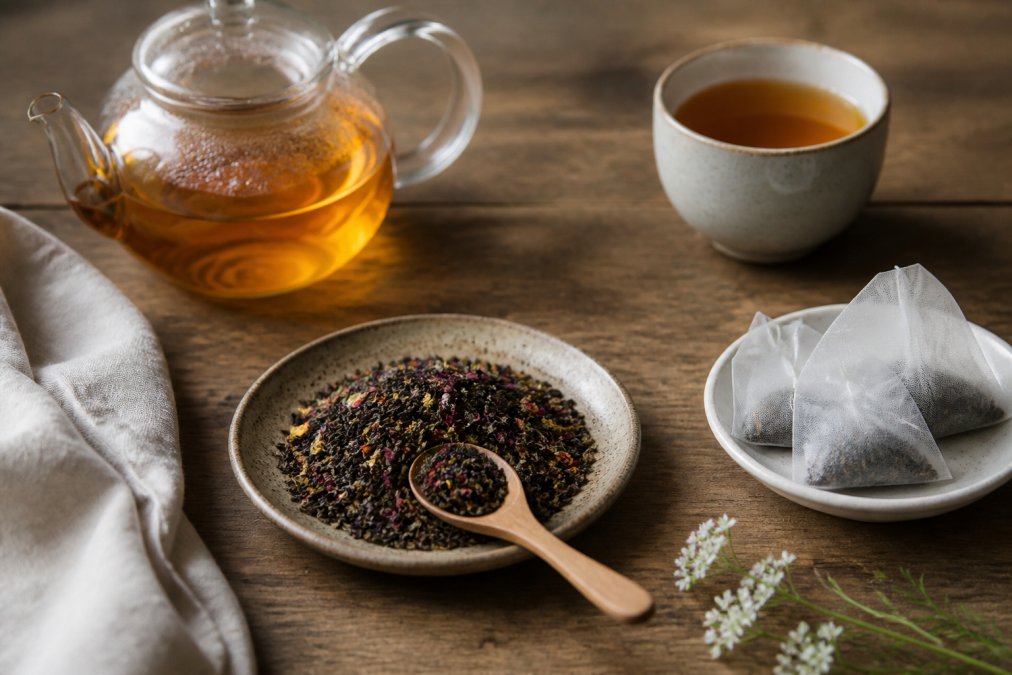
 comparison
Loose Leaf Tea vs Tea Bags: Which Is Better?
Table of Contents
- Loose Leaf Tea vs Tea Bags: The Core Differences
- Flavor and Quality: Why Leaf Size Matters
- Cost Comparison: Tea Bags Are Cheaper, Right?
- Environmental Impact and Microplastics in Tea Bags
- How to Brew Loose Leaf Tea Without the Fuss
- The Best Tea Infusers for Beginners
- Mastering Loose Leaf Tea Brewing Time
- The Verdict: Which Tea Should You Choose?
- Frequently Asked Questions
Last Updated: September 4, 2026
The debate between loose leaf tea vs tea bags usually centers on taste, but the real differences run deeper than flavor. At The Gilded Cafe' Co., we offer premium loose leaf tea, and the distinction comes down to leaf quality, brewing control, and even what materials touch your water. Below, we'll break down the practical differences so you can decide which option fits your daily ritual, your budget, and your values.
Loose Leaf Tea vs Tea Bags: The Core Differences
Loose leaf tea is made from whole or large pieces of tea leaves that retain their natural oils and complex flavor compounds. Tea bags, by contrast, typically contain fannings and dustings, the tiny broken fragments left over after higher-grade leaves are processed. This structural difference drives everything else: how the tea tastes, how long it steeps, and how many infusions you can get from a single serving.
The surface area of the leaf matters more than most people realize. When you pour hot water over whole leaves, the water circulates around them and extracts flavor gradually and evenly. Those small particles in a standard bag release their compounds almost instantly, which is why bagged tea often turns bitter or astringent if you look away for thirty seconds. Whole leaves give you a forgiving window; fannings punish distraction.
Flavor and Quality: Why Leaf Size Matters
A common mistake is assuming all tea comes from the same plant, so the differences must be minor. The plant is the same, but the grade of leaf determines whether you taste the terroir, oxidation, and nuance a grower intended, or just a generic, slightly bitter brew. Whole leaf tea delivers a cleaner cup with more aroma and complexity, while the crushed leaves in bags sacrifice character for convenience.
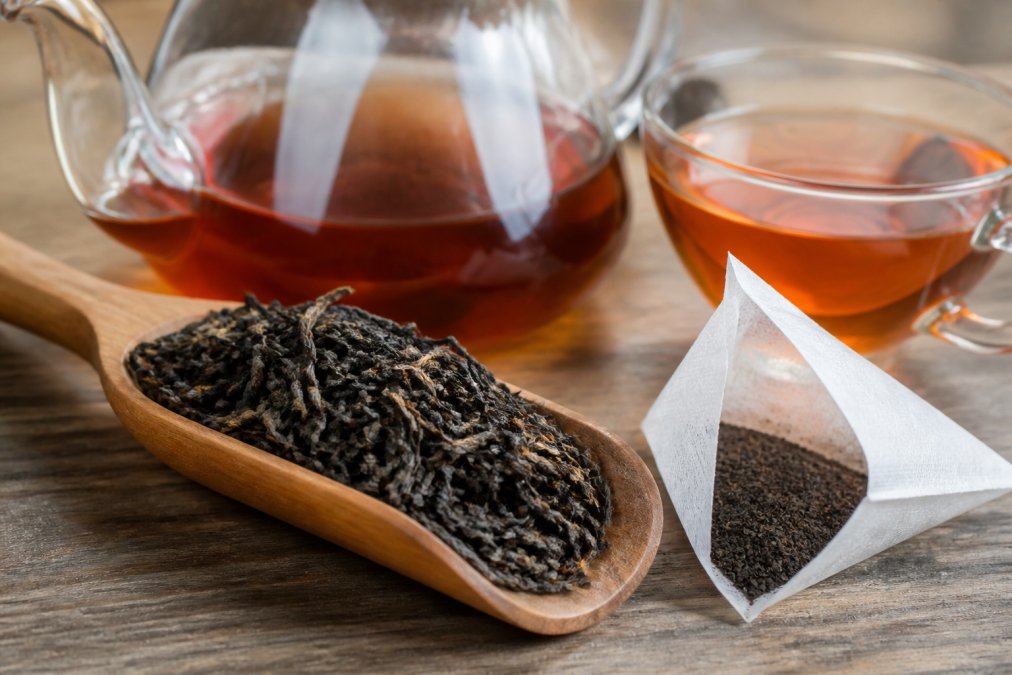
Whole Leaf vs. Fannings: What's in Your Cup
Whole leaf tea is the quality grade that preserves the leaf's structure, allowing for multiple steepings and a layered flavor profile. Fannings and dustings are the broken remnants that brew fast but flat, often carrying more tannins and less of the delicate antioxidants that tea drinkers seek. If you want to taste the difference, steep a high-quality loose leaf tea and a standard bag side by side; the aroma alone tells you which one has more to offer.
Cost Comparison: Tea Bags Are Cheaper, Right?
Tea bags look cheaper at the register, but the math changes when you factor in how much tea you actually use and how many cups you get from a single purchase. A typical bag holds about two grams of fannings and gives you one weak infusion (peer-reviewed research). Premium loose leaf tea can often be re-steeped two or three times, meaning a single serving stretches further than a bag ever could.
Let's break down the numbers with a concrete example. A standard box of 50 tea bags costs around $4.00, which works out to about $0.08 per bag. If you drink one cup per day, that's roughly $2.40 per month. Now consider a pouch of loose leaf tea priced at $22.99 from The Gilded Cafe' Co. That pouch contains 4 ounces (about 113 grams) of tea. Using the recommended 2.5 grams per cup, you get approximately 45 cups from that pouch. But because whole leaf tea can be re-steeped, you might get 90 to 135 cups total. That brings the effective cost down to $0.17 to $0.25 per cup, still higher than the cheapest bagged tea, but competitive with mid-range bagged options that cost $0.15 to $0.30 per bag.
The real savings come from the quality difference. When you buy loose leaf, you are paying for the leaf itself, not the packaging, the string, and the tag. You are also avoiding the hidden cost of wasted tea: bagged tea that goes stale or gets over-steeped and thrown out. Loose leaf tea, stored properly in an airtight container away from light and heat, maintains its freshness for months. A bag that sits in your pantry for six months will taste flat and dusty; a loose leaf tea kept in a sealed tin will still deliver a vibrant cup.
There is also the value of the experience. A $0.20 cup of loose leaf tea that you actually enjoy and look forward to is a better investment than a $0.08 cup of bagged tea that you drink out of habit. If you are the type of person who buys a $5 latte several times a week, switching to loose leaf tea at home will save you money while upgrading your daily ritual. The upfront cost of a simple infuser, usually $10 to $15, pays for itself within the first month of regular brewing.
Environmental Impact and Microplastics in Tea Bags
Many tea bags are sealed with polypropylene, a plastic that helps the bag hold its shape but does not fully break down. Research into microplastic contamination in commercial tea bags has shown that some bags release billions of microplastic particles into a single cup of hot water. Loose leaf tea eliminates this concern entirely, since nothing but the leaf touches your water.
The sustainability argument extends beyond the cup. Loose leaf tea generates far less packaging waste, and many suppliers offer compostable or reusable options. If you brew with an infuser or a strainer, your only waste is the spent leaves, which make excellent garden fertilizer. For drinkers who care about what goes into their bodies and their compost bins, this is a meaningful advantage.
How to Brew Loose Leaf Tea Without the Fuss
The equipment barrier to entry is smaller than most people assume. You do not need a fancy teapot or a chemistry setup; a simple mesh infuser that fits your mug is enough to get started. The key is giving the leaves room to expand and circulate, which is why overstuffed infusers produce weak, uneven cups.
Here is the minimalist method that requires nothing more than a mug, a spoon, and a strainer you likely already own:
- Measure the leaves. Use about one teaspoon of leaf per eight ounces of water. If you have a kitchen scale, 2.5 grams is a more precise starting point. Adjust from there based on your taste.
- Heat your water to the right temperature. This is the step most beginners skip, and it makes the biggest difference. Delicate green teas prefer cooler water around 175 degrees Fahrenheit, while black teas handle a full boil. If you do not have a thermometer, let a rolling boil sit for two to three minutes before pouring for greens; for black teas, pour immediately.
- Pour the water over the leaves, not the other way around. This allows the leaves to unfurl and release their flavor evenly. If you drop leaves into already-poured water, they tend to clump and steep unevenly.
- Steep for the recommended time. Set a timer. Green teas need two to three minutes; black teas need three to five. Herbal infusions can go longer. The moment the timer goes off, remove the leaves or pour the tea through a strainer into another mug.
- Re-steep if the leaves have more to give. Whole leaf tea can often handle two or three infusions. Add a little more time to the second steep and see if the flavor holds. If it does, you have just doubled the value of your purchase.
The most common mistake beginners make is using water that is too hot, which scorches the leaves and produces a bitter, astringent cup. The second most common mistake is overfilling a small infuser ball, which crowds the leaves and prevents proper water circulation. If your tea tastes weak or flat, the problem is usually not the tea, it is the lack of room for the leaves to expand. A basket-style infuser that sits in your mug solves this problem by giving the leaves roughly twice the space of a ball infuser.
Water quality also plays a role. Filtered water lets the tea's natural sweetness come through, while heavily chlorinated tap water can flatten the flavor profile. If your tap water has a strong taste, run it through a basic pitcher filter before brewing. This is a low-effort change that noticeably improves the cup.
The beauty of this method is that it scales. Once you master the basics with a mug and a strainer, you can experiment with a gaiwan, a French press, or a dedicated teapot. But none of that equipment is required to start enjoying the difference that whole leaves make. The barrier to entry is not cost or complexity, it is knowing the three variables of leaf amount, water temperature, and steep time. Get those right, and you are already brewing better tea than most bagged options can deliver.
The Best Tea Infusers for Beginners
For those new to loose leaf, the best tea infusers for beginners are basket-style infusers that sit inside your mug. They give the leaves ample room to expand and are easy to remove when your brew time is up. Ball infusers are compact and portable, but their small size can crowd the leaves and mute the flavor.
If you want to experience what premium leaves can do, try a ceremonial matcha or a whole-leaf option from a curated selection. The Gilded Cafe' Co. offers a range of loose leaf teas designed for home brewing, from floral jasmine to roasted hojicha, each with specific temperature and steeping guidance so you get it right the first time.

Mastering Loose Leaf Tea Brewing Time
Loose leaf tea brewing time varies by type, and getting it right separates a great cup from a bitter one. Green teas typically need two to three minutes, while black teas can steep for three to five minutes. Herbal infusions often benefit from longer steeps of five minutes or more to extract their full character.
Tea Type | Water Temp | Steep Time | Re-steep? |
|---|---|---|---|
Green (Jasmine, Mint) | 175-185°F | 2-3 min | Yes, 2-3 times |
Black (Earl Grey) | 195-212°F | 3-5 min | Yes, 1-2 times |
Matcha | 175°F | Whisk, no steep | No |
Hojicha | 175°F | Whisk, no steep | No |
Water quality also plays a role. Filtered water lets the tea's natural sweetness come through, while heavily chlorinated tap water can flatten the flavor profile. Temperature precision matters too; a thermometer is helpful at first, but most drinkers learn to recognize a rolling boil versus a gentle simmer by sight.

The Verdict: Which Tea Should You Choose?
If your priority is convenience above all, tea bags will always win. They are portable, fast, and require no extra equipment. But if you value flavor, freshness, and the ritual of making something with intention, loose leaf tea is the better choice for most home drinkers.
The Gilded Cafe' Co. built its loose leaf selection for people who want their daily cup to feel like a small luxury. Whole leaves, transparent sourcing, and clear brewing instructions remove the guesswork. Start with a classic like Earl Grey Black Tea or a soothing Jasmine Green Tea, and give yourself a few brews to dial in your preferred strength.
Frequently Asked Questions
Is loose leaf tea healthier than bagged tea?
Loose leaf tea often retains more antioxidants because it uses larger leaf pieces. The fannings and dust in tea bags have more surface area, which can cause them to lose volatile oils and nutrients faster. Loose leaf tea also avoids the microplastics found in some synthetic tea bag materials, so you get a cleaner cup without those particles.
How much loose leaf tea equals one tea bag?
A standard tea bag holds about 2 to 3 grams of tea. Use roughly 2.5 grams of loose leaf tea per 8 to 12 ounces of water. Since loose leaf tea expands as it steeps, it may look like less in the spoon, but the flavor will be more concentrated than the dusty contents of a bag.
What are the disadvantages of loose leaf tea?
The main barriers are the extra equipment needed and the slightly longer prep time. You need an infuser, strainer, or teapot to contain the leaves. Loose leaf tea also costs more upfront per ounce, although the ability to resteep quality leaves several times lowers the effective cost per cup.
Does loose leaf tea have more caffeine than tea bags?
Not necessarily per gram, but loose leaf tea often uses younger buds and larger leaves that can contain more caffeine. Since you can steep loose leaf tea multiple times, your total caffeine intake may be higher across several infusions compared to a single-use bag.
This article was written using GrandRanker
Frequently Asked Questions
Is loose leaf tea healthier than bagged tea?
Loose leaf tea often retains more antioxidants because it uses larger leaf pieces. The fannings and dust in tea bags have more surface area, which can cause them to lose volatile oils and nutrients faster. Loose leaf tea also avoids the microplastics found in some synthetic tea bag materials, so you get a cleaner cup without those particles.
How much loose leaf tea equals one tea bag?
A standard tea bag holds about 2 to 3 grams of tea. Use roughly 2.5 grams of loose leaf tea per 8 to 12 ounces of water. Since loose leaf tea expands as it steeps, it may look like less in the spoon, but the flavor will be more concentrated than the dusty contents of a bag.
What are the disadvantages of loose leaf tea?
The main barriers are the extra equipment needed and the slightly longer prep time. You need an infuser, strainer, or teapot to contain the leaves. Loose leaf tea also costs more upfront per ounce, although the ability to resteep quality leaves several times lowers the effective cost per cup.
Does loose leaf tea have more caffeine than tea bags?
Not necessarily per gram, but loose leaf tea often uses younger buds and larger leaves that can contain more caffeine. Since you can steep loose leaf tea multiple times, your total caffeine intake may be higher across several infusions compared to a single-use bag.